



Kucuksu Rasathane
Uskudar Istanbul Turkey

Mon–Fri 09:00–18:00 (GMT+3)
Weekend: Closed
UPCOM Cable Blowing Accessory
Split Duct Coupler
Split duct coupler is a reusable connection tool used in cable blowing operations to join two ducts quickly and keep the installation process moving with less delay in the field. Instead of treating the joint as a disposable bottleneck, the coupler gives installers a faster and more practical way to continue the blowing route.
Its opening body and clamp mechanism help technicians connect duct sections, continue cable installation, and remove the coupler again after the operation. This is especially useful in telecom projects where time loss, limited space, and one-time-use plastic connectors become a real site problem.
- Reusable hinged body
- Faster than standard plastic couplers
- For cable blowing operations
- Ø20 / Ø32 / Ø40 / Ø50 options
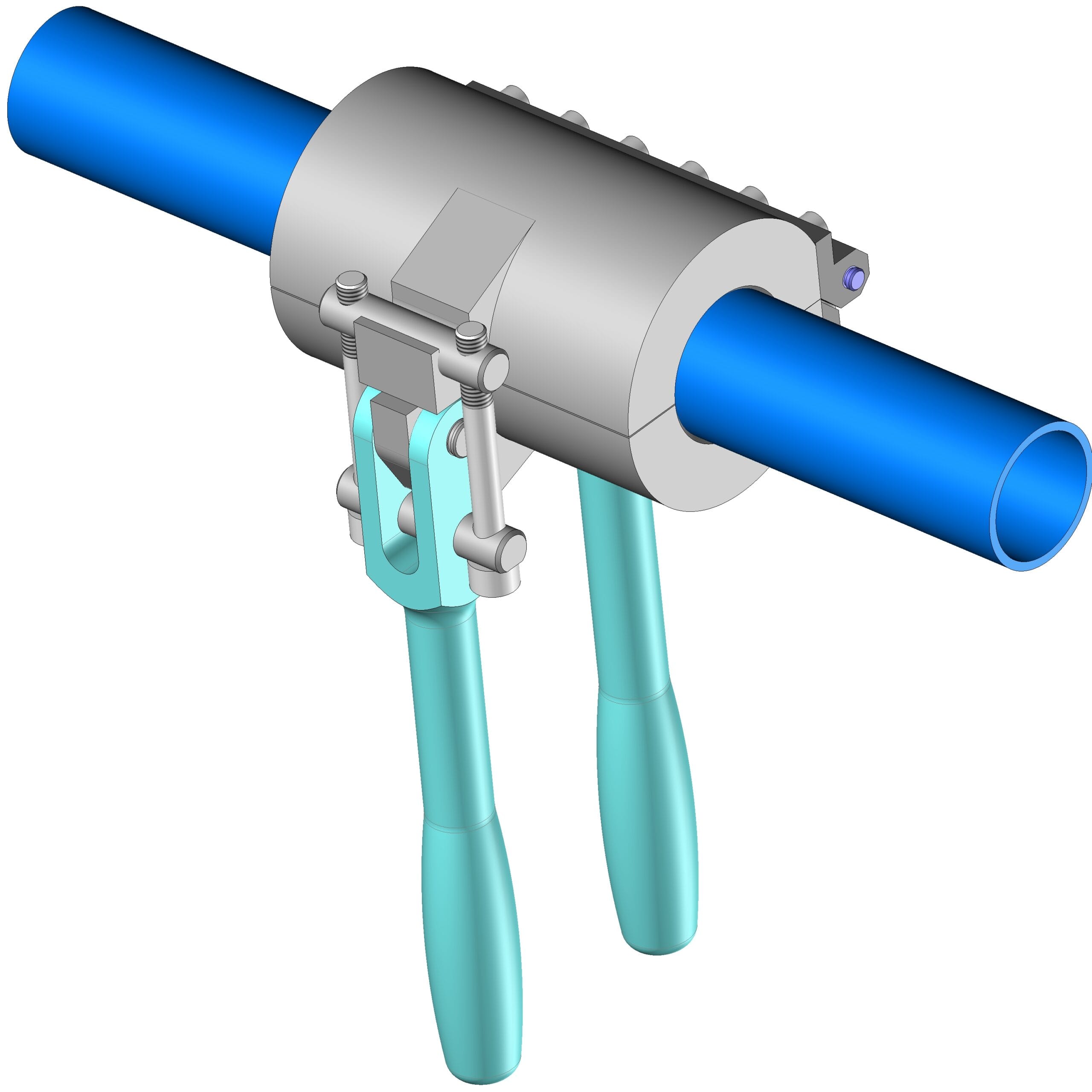
Designed for field use where two ducts must be connected quickly and the coupler should still be removable after cable blowing.
Split Duct Coupler for Cable Blowing Operations
In fiber optic installation work, the duct joint is not just a small accessory detail. It directly affects setup speed, continuity, and how easily the crew can move from one duct section to the next. A well-designed duct coupler reduces interruption at the joint and helps keep the blowing procedure cleaner and more controlled.
This split duct coupler is used to connect two duct ends during cable blowing. The main practical advantage is simple: the coupler can be opened, clamped into position, used during installation, then removed again instead of being treated as a cut-and-throw-away part.
It is particularly useful in telecom duct systems, including routes based on HDPE conduit infrastructure, where route continuity and joint handling affect field speed. For a broader technical view of cable installation in ducts, see this external note on blowing and pulling cable in duct systems.
Why Use a Split Duct Coupler Instead of Standard Couplers
Faster joint preparation
The clamp structure makes the connection step faster than standard plastic couplers that often slow the crew down during setup.
Reusable after cable blowing
Because the body can be opened again, the coupler does not need to be destroyed or cut away after the cable has passed through the joint.
Better field practicality
Installers gain a cleaner workflow in tight jobsite conditions, especially when the duct is short inside a manhole or difficult to grip from outside.
In short, this product is not just about “joining two pipes.” It removes one of the small but annoying interruptions that can slow cable blowing crews for no good reason.
How the Split Duct Coupler Works
1
Open the split duct coupler
Release the clamp and open the body so the duct ends can be positioned without forcing the joint into place.
2
Place the duct ends from both sides
Align the two ducts correctly and position the coupler at the transition point so the route remains ready for cable blowing.
3
Tighten the clamp mechanism
Close and secure the coupler body. Once the ducts are held firmly, the installation route is ready for the cable blowing procedure.
4
Remove and reuse after the operation
After the cable has passed, the coupler can be opened again and removed instead of being cut off and discarded.
Split Duct Coupler Types for Inside and Outside Connection
UPCOM’s product range in the catalog shows two practical connection approaches depending on site conditions. The outside version is suited to standard access conditions, while the inside connection style is useful where the duct is short in the manhole or difficult to hold from the outside.
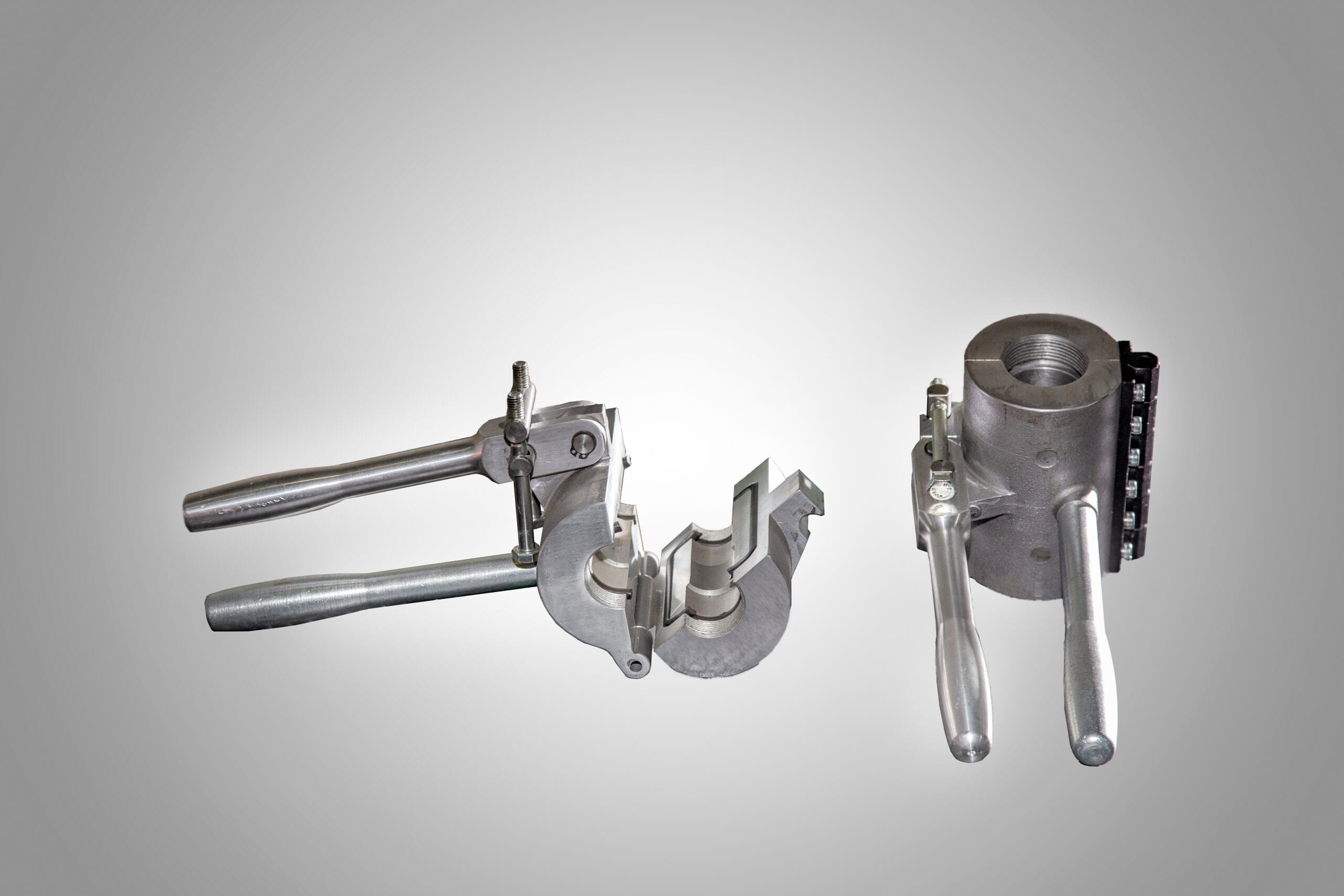
This inside / outside logic is one of the strongest practical points of the product because jobsite geometry is rarely as convenient as catalog drawings pretend it is.
Split Duct Coupler Specifications
| Product type | Split duct coupler / duct coupling device |
|---|---|
| Main use | Joining two ducts during cable blowing operations |
| Body style | Opening split body with clamp mechanism |
| Reuse | Removable and reusable after cable installation |
| Application style | Inside connection and outside connection variants |
| Standard duct diameters | Ø20, Ø32, Ø40, Ø50 |
| Custom production | Available for different diameters on request |
| Typical installation method | Open, place duct ends from both sides, tighten, start installation |
| Industry use | Fiber optic cable blowing and telecom duct installation |
Standard sizes listed in the technical note are Ø20 / Ø32 / Ø40 / Ø50, with additional diameters possible on customer request.
Split Duct Coupler PDF and Related Products
Product PDF
Use the official product PDF for catalog reference, project discussion, or technical review.
Related UPCOM products
This duct coupling device is typically used together with cable blowing machines and related installation accessories.
FOK Cable Blowing Machine
Versatile solution for mid-to-large cable installation.
HidroFOK Cable Blowing Machine
Hydraulic machine for heavy-duty cable blowing projects.
MiniFOK Cable Blowing Machine
Compact option for smaller cable diameters and site flexibility.
MikroFOK Cable Blowing Machine
Precision solution for micro cable and FTTH-type applications.
DrillFOK Cable Blowing Machine
Practical drill-powered solution for smaller cable installations.
Universal Cable Blowing Lubricant
Recommended companion product to reduce friction during installation.
Where This Duct Coupler Adds Value
Telecom contractors
Useful for crews that need faster duct transitions without treating connectors as disposable waste after every installation.
Fiber installation teams
Supports smoother workflow when the cable blowing route includes duct joints, short manhole sections, or difficult access points.
Distributors and project suppliers
Easy to position as a practical cable blowing accessory rather than a generic fitting, which is exactly where its value actually sits.
FAQ About Split Duct Coupler Use
What is a split duct coupler used for?
It is used to connect two ducts during cable blowing operations so the installation can continue through the joint more efficiently.
Why is a split duct coupler better than a standard plastic coupler?
The main advantage is reusability and easier removal. After cable installation, the coupler can be opened and removed instead of being cut and discarded.
Can this duct coupling device be reused?
Yes. Its split opening body is designed to be removed and reused in repeated field operations.
Which duct sizes are available?
Standard sizes are Ø20, Ø32, Ø40, and Ø50. Other diameters can be produced on request.
Is it only for outside duct connection?
No. The product family also supports inside connection logic for situations where the duct cannot be gripped conveniently from the outside.
Is this product suitable for fiber optic cable blowing projects?
Yes. It is positioned specifically for cable blowing and telecom duct installation work where joint handling affects field efficiency.
Need a split duct coupler for your cable blowing setup?
Share your duct diameter, route condition, and machine model. UPCOM can help you choose the right coupling style for the installation.