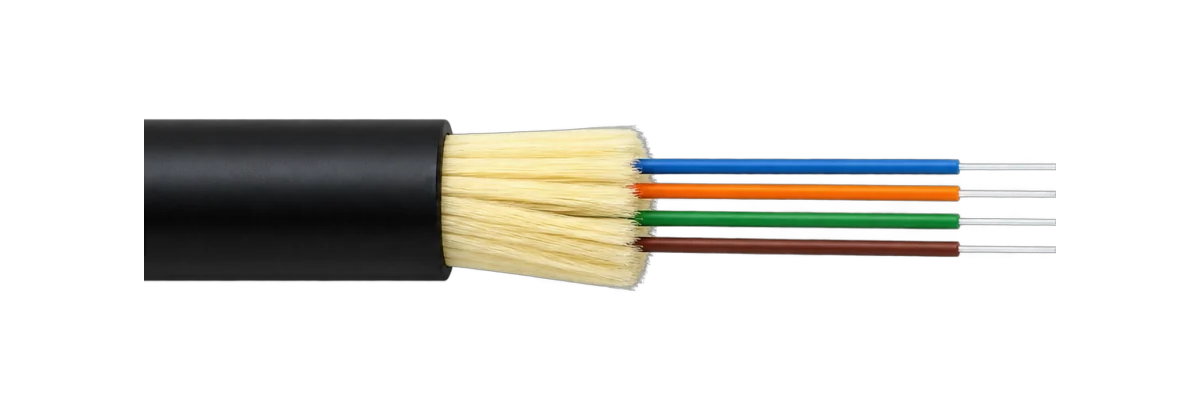
I-V(ZN)H premises distribution cable is a 2-24 fiber, tight-buffered indoor cable for building backbone, riser, underfloor, horizontal and fiber-to-the-desk routes. It combines 900 µm LSZH tight-buffered fibers, aramid-yarn strength members and an LSZH outer sheath in an all-dielectric construction.
Premises Distribution Cable for Indoor Network Runs
The compact I-V(ZN)H construction supports high-density indoor optical distribution routes. Its individually buffered fibers simplify identification and handling at termination points, while the final splicing or connectorization method must be selected according to the connector system and project specification.
Space-Saving Indoor Layout
The compact design helps in pathways where routing space is limited, including shafts, risers and underfloor installations. That makes the cable practical for organized indoor network distribution.
900 µm Tight-Buffered Fibers
Each fiber has a 0.9 mm LSZH tight buffer for individual identification and handling. Direct field connectorization is not universal; confirm compatibility with the selected connector and termination process.
LSZH Construction
The tight buffers and outer sheath are specified as LSZH. Where a defined CPR class or fire-test result is mandatory, request the relevant declaration and test documentation for the offered cable configuration.
This cable is intended for protected indoor routes where compact dimensions, individual tight-buffer access and non-metallic construction are required. It is not designed for exposed outdoor installation.
Typical installation areas
Indoor application
Installation in shafts and underfloor areas
Secondary cabling in vertical riser and backbone sections
Tertiary horizontal cabling in the working area
Fiber-to-the-desk, trunk and adapter cable environments
Projects that need non-metallic, halogen-free and gel-free indoor cable construction
Where it adds value
Indoor networks where cable diameter and pathway organization matter
Sites that need easy access to individually identified 900 µm tight-buffered fibers
Office, campus and building interiors that prioritize LSZH behavior
Installations requiring clean handling without metallic elements
Projects evaluating premises distribution cable instead of bulkier indoor breakout constructions
Premises Distribution Cable Highlights
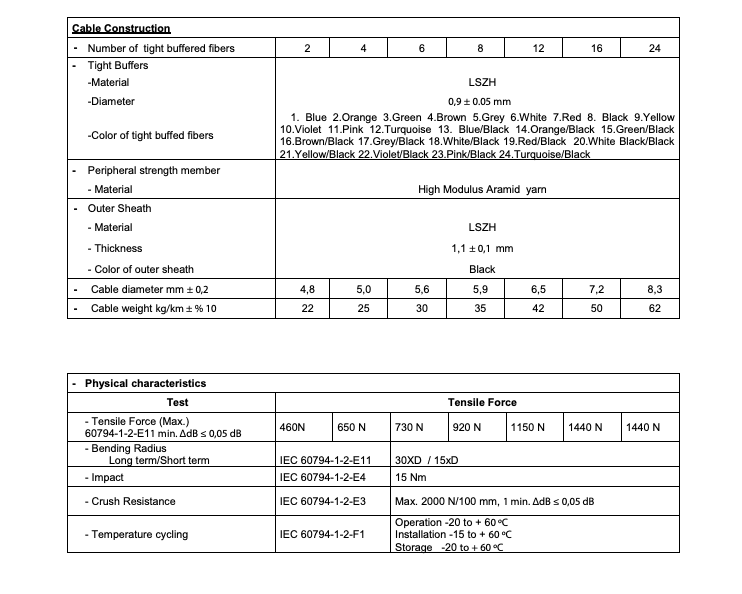
Available configurations cover 2, 4, 6, 8, 12, 16 and 24 fibers. Nominal diameter, weight and tensile performance vary by fiber count and must be confirmed in the datasheet before ordering.
2-24 fiber configurations
Non-metallic strength members
Complete dry design
All-dielectric construction
LSZH buffers and outer sheath
Flexible indoor handling
900 µm tight-buffered fibers
Suitable for dense indoor pathways
How to Select a Premises Distribution Cable
If you are comparing this I-V(ZN)H premises distribution cable with other indoor fiber constructions, use the route, termination plan and fire-performance requirement as your first filters instead of looking only at cable name.
Selection steps
Confirm that the route is strictly indoor and does not require outdoor mechanical protection or moisture-blocking logic beyond the intended indoor build.
Define whether the cable will run in shafts, underfloor pathways, risers or horizontal working-area routes.
Define the termination method: fusion splicing to pigtails, mechanical termination or a compatible field-installable connector.
Separate the LSZH material requirement from any mandatory CPR class or project-specific fire-test requirement.
Use the datasheet to confirm fiber count, cable diameter, weight, tensile rating, bend radius and temperature range before RFQ or project release.
Illustrative construction view for the premises distribution cable family.
Compliance and Construction References
The product datasheet cites IEC 60794-1-2 mechanical and environmental test methods. LSZH materials are specified for the tight buffers and outer sheath; project-specific fire or CPR compliance requires separate supporting documentation.
Referenced standards
IEC 60794-1-2: test methods cited in the datasheet for tensile force, bending, impact, crush resistance and temperature cycling.
LSZH material specification: applies to the 0.9 mm tight buffers and the outer sheath.
Project qualification: request applicable IEC 60332, IEC 60754, IEC 61034 or EN 50575 / CPR evidence when any of these are contractual requirements.
Cable construction
The cable contains 2-24 individually color-coded 900 µm LSZH tight-buffered fibers, high-modulus aramid yarn and a black LSZH outer sheath. The datasheet specifies a fully non-metallic construction.
Qualification note: LSZH describes the specified cable materials; it does not by itself confirm a CPR class or compliance with every smoke, halogen and flame-propagation test. Request the product datasheet and supporting compliance documents for the exact offered configuration.
Related Indoor Fiber Cable Products and Guides
Compare adjacent indoor cable constructions and termination options before finalizing the route and fiber-count specification.
Support page for users who want broader fiber-optic background before comparing cable families.
FAQ About Premises Distribution Cable
These questions answer the most common selection points around indoor I-V(ZN)H cable usage.
What is a premises distribution cable?
A premises distribution cable is an indoor fiber optic cable used for structured building networks, backbone sections, horizontal runs and fiber-to-the-desk applications where compact routing and access to individually buffered fibers are important.
Is I-V(ZN)H premises distribution cable suitable for outdoor installation?
No. I-V(ZN)H is intended for protected indoor routes such as shafts, underfloor pathways, risers and working-area cabling. Use an outdoor-rated construction where the cable will be exposed to moisture, sunlight or external mechanical risk.
Can this premises distribution cable be used for riser and horizontal cabling?
Yes, subject to the building’s route and fire-performance requirements. Typical uses include vertical backbone or riser sections and horizontal cabling toward the working area.
Can connectors always be fitted directly to the 900 µm tight-buffered fibers?
No. The 900 µm tight buffer supports individual fiber handling, but connector compatibility depends on the connector design and installation process. Confirm whether the project will use fusion-spliced pigtails, mechanical termination or a compatible field-installable connector.
When should I compare this cable with breakout or mini breakout alternatives?
Compare them when pathway density, mechanical separation, termination style or finished-assembly requirements may push the project toward another indoor fiber cable structure.
Premises Distribution Cable - I-V(ZN)H
Request a Quote
Premises Distribution Cable - I-V(ZN)H
Share your quantity and delivery country. Technical details are optional; you can ask us to help with the specification.