



02 Mar Cable Blowing Machine Selection Guide (OD, Duct Size, Distance)
Cable Blowing Machine Selection Guide: Cable OD vs Duct Size vs Distance
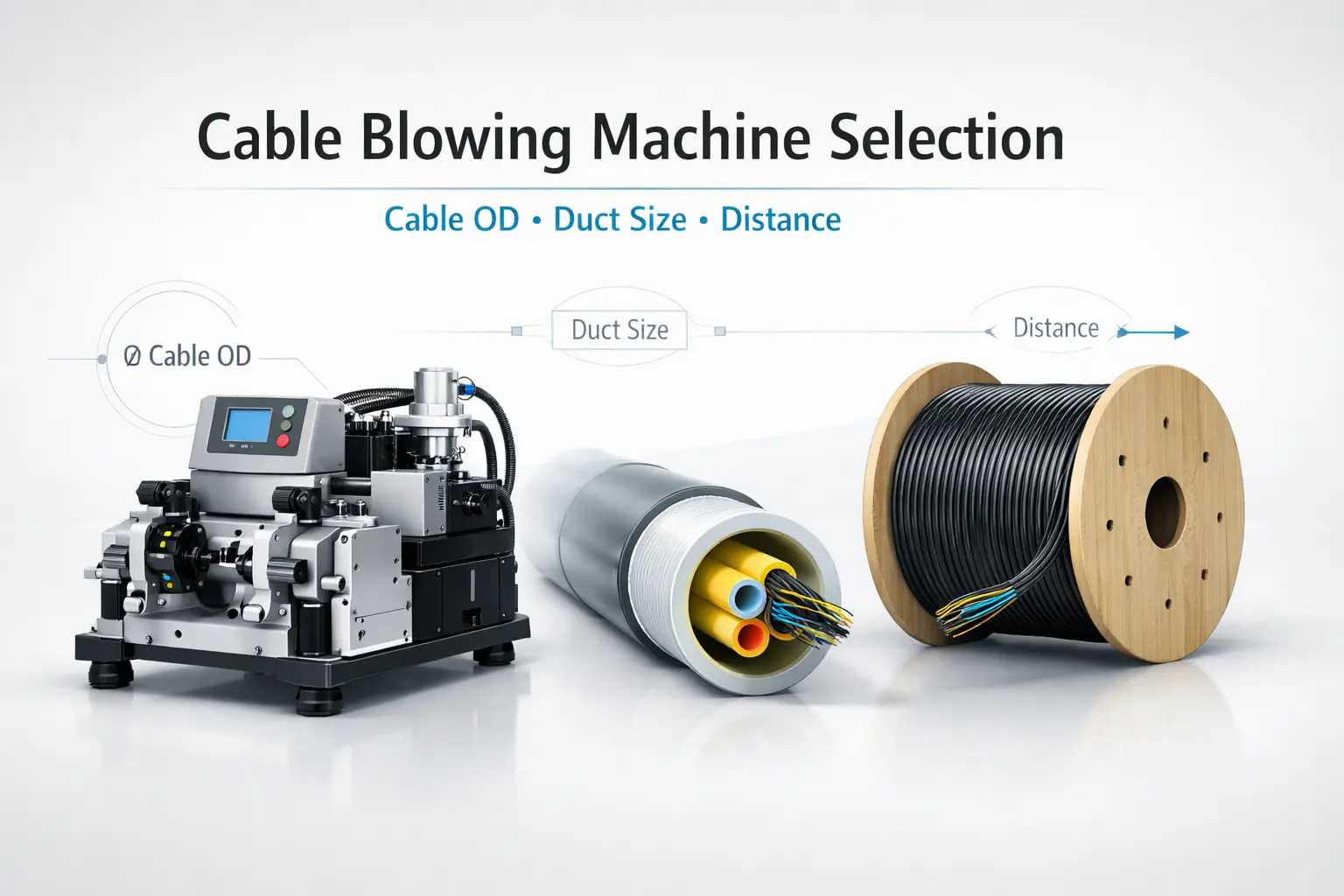
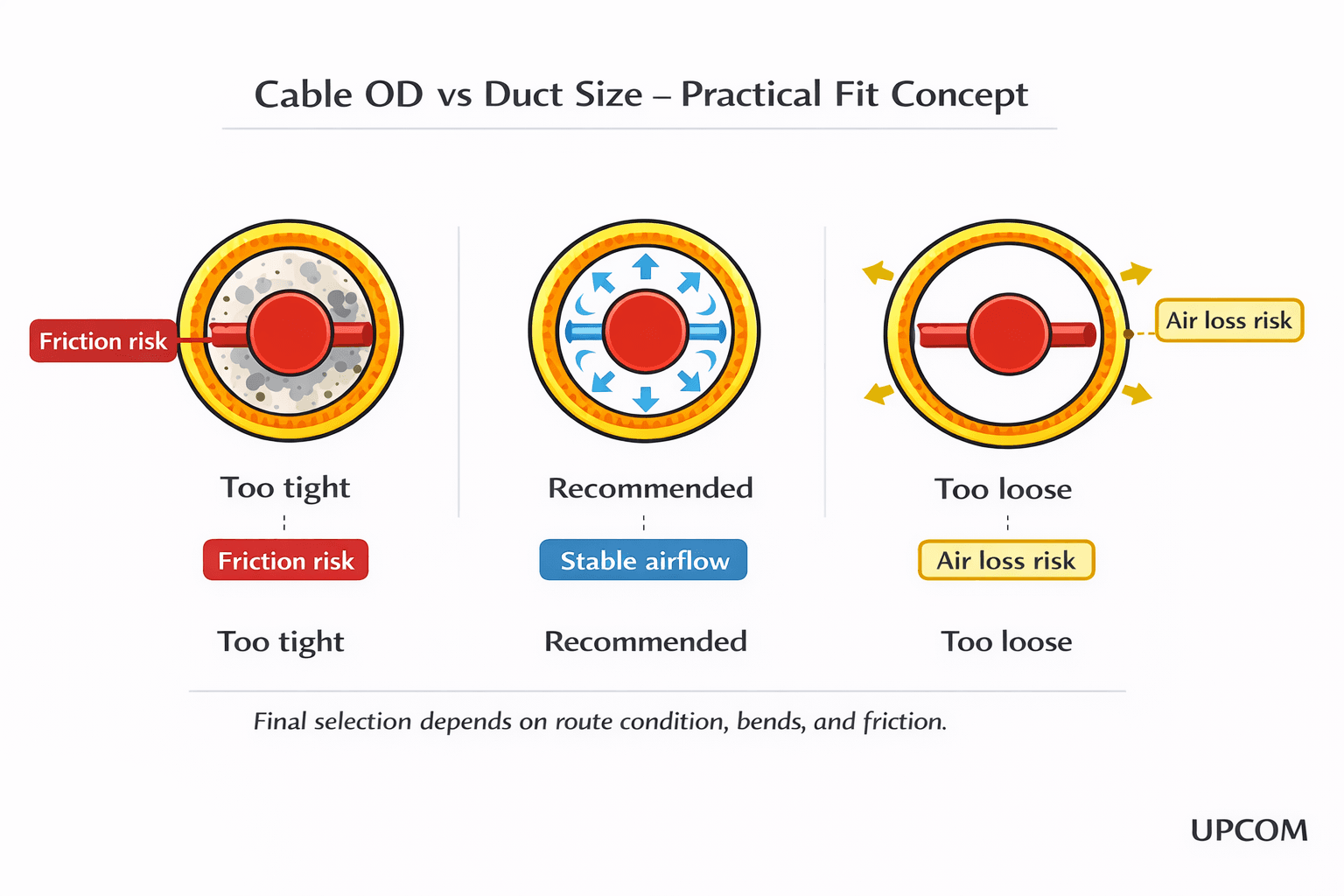
This cable blowing machine selection guide is not about picking “the strongest machine”. It’s about matching cable outer diameter (OD), duct size, and your target distance with the right drive method and configuration. Get this wrong, and you lose time, damage cable, waste consumables, and end up re-quoting the same job.
If you already know your cable OD, duct size, and route length, jump straight to the quote form: Cable Blowing Machine Quote .
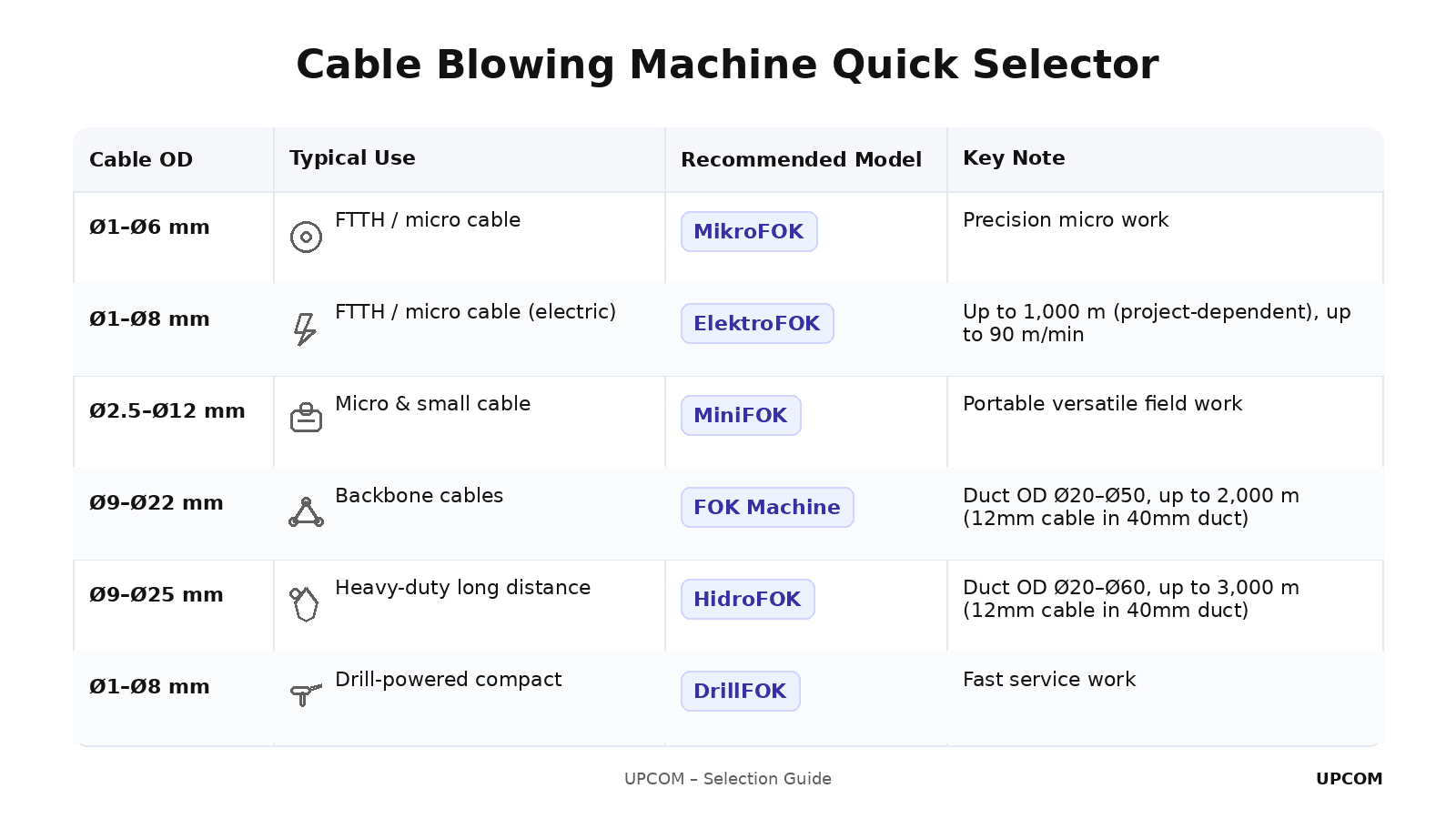
Cable Blowing Machine Selection: Quick Selector by Cable OD
Start with the maximum cable OD you plan to install in that project. Then check your duct size and target distance to confirm the configuration. The table below is a fast shortlist. Final configuration depends on route condition, friction, bends, and installation method.
Rule of thumb: Most failures come from wrong friction assumptions and poor duct preparation, not from “insufficient machine power”.
| Cable OD Range | Typical Use | Recommended Model | Notes |
|---|---|---|---|
| Ø1–Ø6 mm | FTTH / micro cable installations | MikroFOK | Precision micro work where control matters most. Best choice to minimize micro cable damage risk. |
| Ø1–Ø8 mm | FTTH / micro cable installations (electric drive) | ElektroFOK | Electric drive for consistent setup. Up to 1,000 m (project-dependent), up to 90 m/min. |
| Ø2.5–Ø12 mm | Micro & small cables, versatile field work | MiniFOK | Portable “bridge” model for mixed jobs, up to Ø12 mm. |
| Ø9–Ø22 mm | Backbone / distribution cables | FOK Machine | Pneumatic workhorse. Duct OD Ø20–Ø50. Up to 2,000 m (12 mm cable in 40 mm duct). |
| Ø9–Ø25 mm | Heavy-duty / long-distance installations | HidroFOK | Hydraulic power for tougher routes. Duct OD Ø20–Ø60. Up to 3,000 m (12 mm cable in 40 mm duct). |
| Ø1–Ø8 mm | Compact, drill-powered applications | DrillFOK | Compact drill-powered option for fast service work and short-to-medium micro installations. |
Model Guide: When to Choose Each Cable Blowing Machine
Use this section after the quick selector to confirm the best-fit model for your typical projects. If you want a fast, correct recommendation, share your cable OD, duct size and target distance via the quote form.
MikroFOK (Ø1–Ø6 mm): FTTH Precision Micro Cable Blowing
MikroFOK is built for controlled installation of Ø1–Ø6 mm micro cables where consistent feeding matters more than brute force. Choose MikroFOK when you want stable traction and minimum risk of micro cable damage.
ElektroFOK (Ø1–Ø8 mm): Electric Drive for Micro Cable Installation
ElektroFOK Cable Blowing Machine is an electric motor driven solution for Ø1–Ø8 mm micro cable installation. It is preferred by teams that want a consistent electric setup for FTTH and microduct deployments.
If your typical jobs are micro cable projects and you want fast setup plus repeatable performance, the ElektroFOK cable blowing machine is often the most practical choice.
MiniFOK (Ø2.5–Ø12 mm): Portable and Versatile for Mixed Jobs
MiniFOK is the practical middle ground when you need portability but still want capacity up to Ø12 mm. It fits crews doing microduct builds plus small cable routes.
FOK Machine (Ø9–Ø22 mm): Pneumatic Workhorse for Backbone Blowing
FOK Machine is a pneumatic drive machine engineered for standard backbone work: Ø9–Ø22 mm cable OD and typical Ø20–Ø50 mm duct OD. It is usually the most cost-effective core machine for recurring backbone projects.
- Pallet options (mm): 9–13 / 14–18 / 19–22
- Max speed: up to 80 m/min
- Max air pressure: 16 bar
- Max water pressure: 23 bar
- Typical max distance (reference case): up to 2,000 m (12 mm cable in 40 mm duct)
- Linear pressure on cable: 0–101 N/cm
- Total weight: 49 kg (with case)
HidroFOK (Ø9–Ø25 mm): Hydraulic Power for Tougher Routes and Longer Runs
HidroFOK is built for demanding installations where heavier cable constructions, higher friction routes, or extended distance targets justify a hydraulic power unit drive. It covers Ø9–Ø25 mm cable OD and typical Ø20–Ø60 mm duct OD.
- Drive: Hydraulic Power Unit (standard: 2 hydraulic motor drive)
- Pallet options (mm): 9–13 / 14–18 / 19–22 / 23–25
- Max speed: up to 80 m/min
- Max air pressure: 16 bar
- Max water pressure: 23 bar
- Typical max distance (reference case): up to 3,000 m (12 mm cable in 40 mm duct)
- Linear pressure on cable: 0–101 N/cm
- Total weight (HPU + machine): 178 kg
DrillFOK (Ø1–Ø8 mm): Drill-Powered Compact Blowing for Service Work
DrillFOK is a compact, drill-powered option for micro cable tasks and service work. Choose it when portability and fast setup matter most, and distances are typically short-to-medium.

Configuration Logic: The Machine Is Only Half the Selection
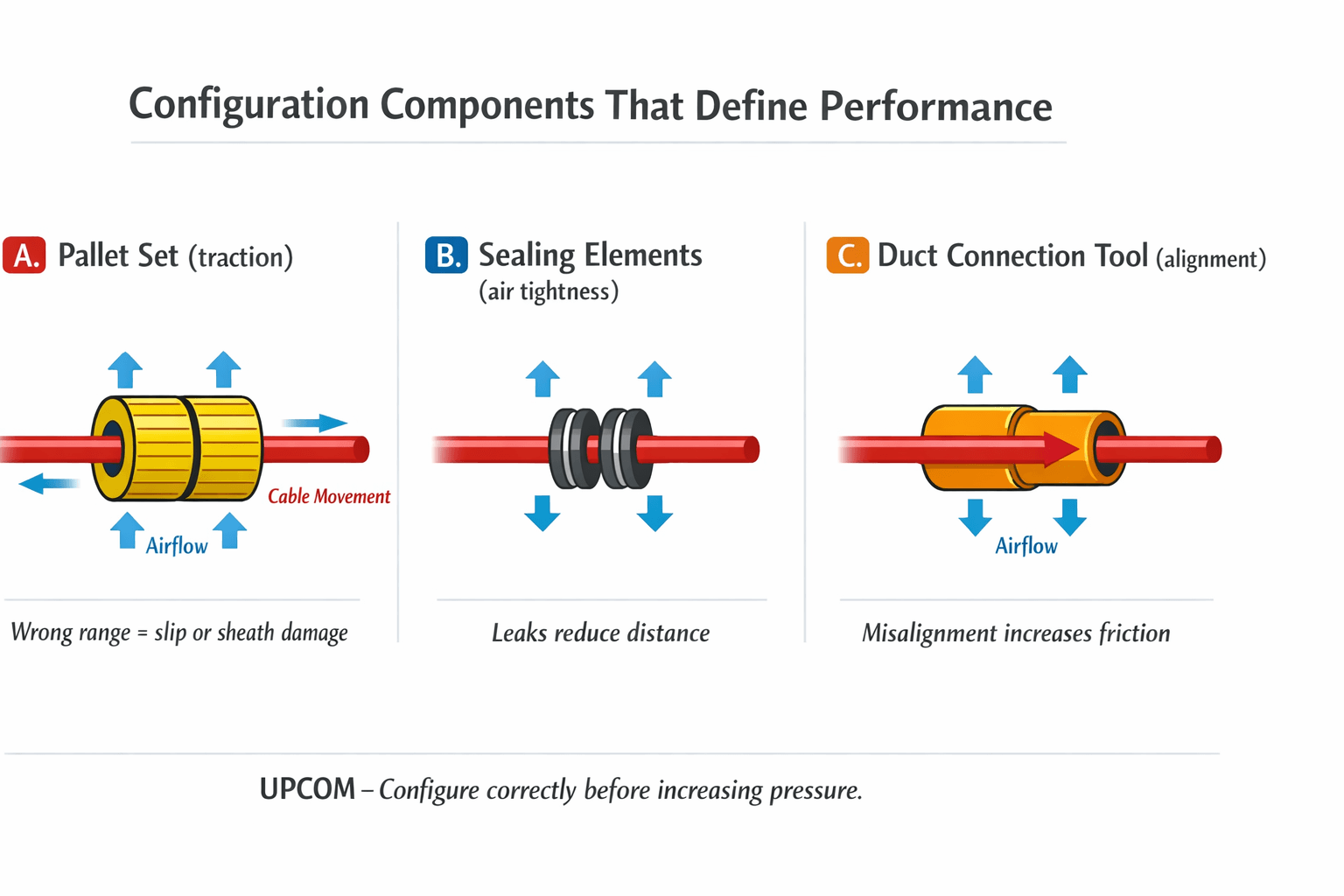
A cable blowing machine performs as well as its configuration. The right combination of pallet set, sealing elements, and duct connection tools determines traction stability, air loss, and installation safety.
1) Pallet Set: Match the Cable OD (Not “Close Enough”)
Pallet sets are not cosmetic accessories. They directly affect traction and surface pressure. Using the wrong range increases slip, damages sheath, or creates inconsistent feed, especially in micro cable work.
2) Sealing Elements: Stop Air Leakage Before You Chase “More Pressure”
Air leakage is one of the most common reasons teams blame the machine, the compressor, or the cable. In reality, the duct connection and sealing elements must be correct and well-maintained. If performance is unstable, inspect sealing and connectors first.
3) Duct Connection Tools: Stability and Alignment Matter
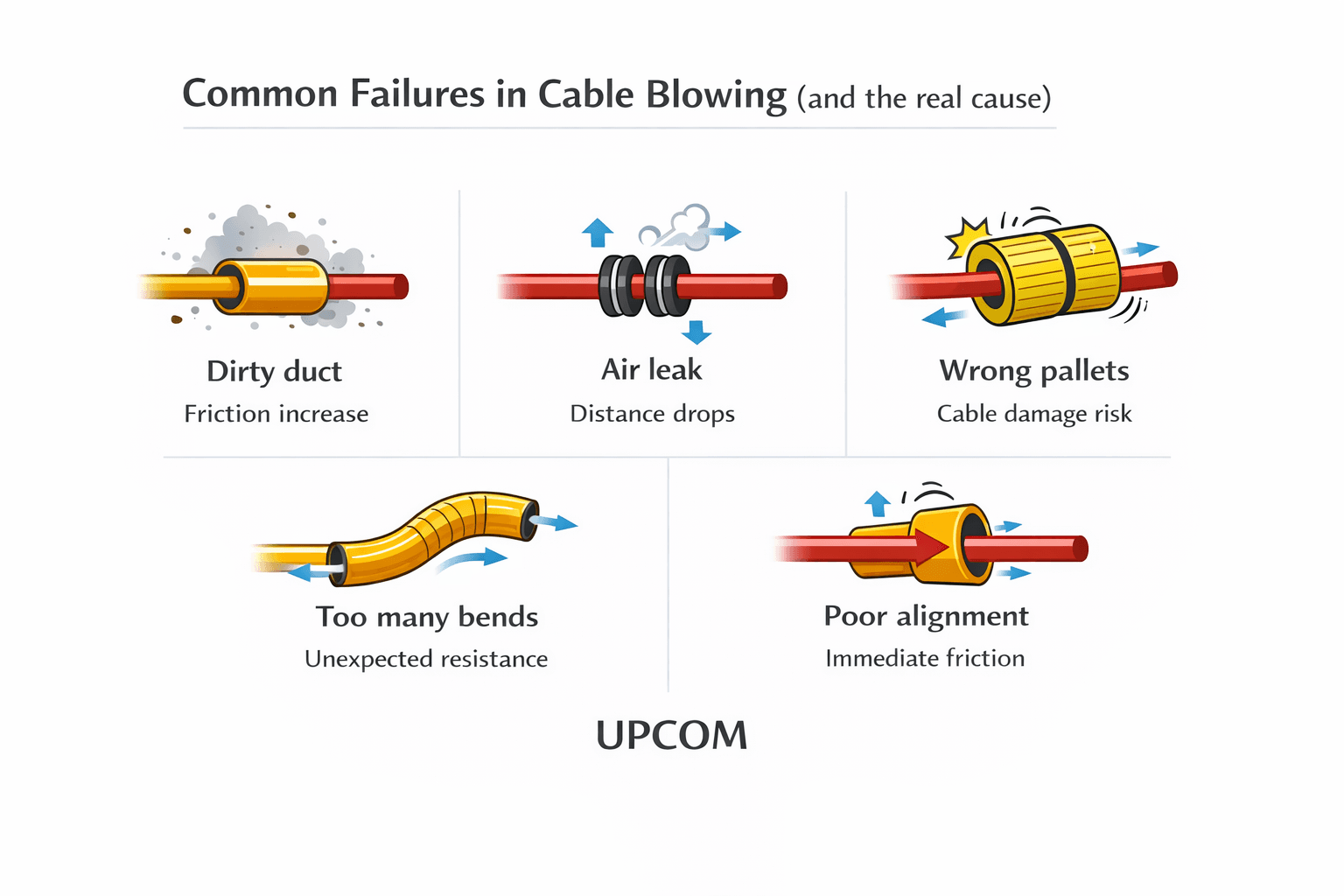
Poor alignment at the duct entry introduces friction immediately and reduces achievable distance. A stable connection also improves safety and reduces rework during setup.
Fast Configuration Checklist (before quoting)
- Cable OD (mm) and cable type
- Duct size (ID/OD) and duct type (duct/microduct)
- Route notes: bends, couplers, terrain
- Pallet range matched to OD
- Entry sealing + stable duct connection (to prevent air loss)
Common Installation Failures (And What Actually Causes Them)
Failure #1: “The machine is weak” (but the duct is not prepared)
Dust, water, duct deformation, and sharp bends multiply friction. A clean, proven duct path is the fastest way to gain distance without increasing risk.
Failure #2: Air leaks at the entry connection
Leaks reduce effective airflow and make the process unstable. Check sealing condition, connector alignment, and correct fit before changing compressor settings.
Failure #3: Wrong pallet range or uneven traction
Pallets must match the cable OD range. If pallets slip, the cable sheath heats up, and micro cables are especially sensitive to this.
Failure #4: Underestimating bends and route complexity
Straight-line distance is not the real distance. Bends, couplers, elevation changes, and duct condition define the friction profile. This is why “project-dependent distance” is not marketing talk, it’s physics.
Failure #5: Lubrication and installation method mismatch
Lubrication, airflow, and traction settings must be consistent with the cable construction and route conditions. Incorrect assumptions lead to unstable feed or sudden stops.
For general background on fiber optic cabling and installation concepts, see Fiber-optic cable and Compressed air.
For general background on fiber optic cabling and installation concepts, see Fiber-optic cable and Compressed air.