



Kucuksu Rasathane
Uskudar Istanbul Turkey

Mon–Fri 09:00–18:00 (GMT+3)
Weekend: Closed
Figure-eight cable storage for staged duct routes
Cable Fleeter Trailer
Cable Fleeter Trailer is a trailer-mounted cable storage system for cable blowing projects where the first duct leg is completed, the remaining cable must stay clean and protected, and the next leg must start with the same cable end ready for blowing. Instead of laying figure-eight loops on the ground, the cable is guided into the trailer cassette and kept elevated, controlled and organized for the next stage.
This makes the workflow safer on busy jobsites, reduces contamination from mud and dust, limits unnecessary bending stress, and improves continuity on long underground routes with manholes, couplers or multiple duct sections. The trailer works as part of the overall cable blowing machine setup rather than as a stand-alone blowing unit.
3,000 m
Typical storage capacity for Ø 13 mm cable
6,000 m
Typical drum length scenario supported on staged routes
800 - 1600 mm
Drum diameter range from datasheet

Cable Fleeter Trailer for safer figure-eight storage
On underground fiber projects, the cable is often installed in more than one duct leg. When the first section is finished, contractors need a clean way to manage the balance of cable before continuing to the next leg. A Cable Fleeter Trailer replaces manual figure-eight handling on the ground and turns that transition point into a controlled storage stage.
The trailer-mounted cassette keeps the cable above the surface, away from site traffic and away from mud, dust and uncontrolled dragging. That matters even more when the installation includes manholes, couplers, staged blowing operations or long cable lengths that would otherwise create a messy and risky working area.
What the trailer does
- Stores the remaining cable after the first duct section is completed
- Delivers the same cable end ready for the next blowing stage
- Keeps cable feed controlled instead of loose on the ground
- Supports cleaner and more repeatable site handling
Why it matters on site
- Reduces contamination before the next cable blowing pass
- Lowers bending abuse and accidental abrasion risk
- Improves pedestrian and vehicle safety around the route
- Helps crews move faster between separate duct legs
For general background on HDPE conduit and broader outside plant fiber installation, these references are useful for project planning and route context.
Key benefits on cable blowing jobs
Cleaner cable feed
Keeping the cable elevated helps reduce site contamination before the next blowing stage.
Lower damage risk
Controlled storage helps avoid random loops, sharp abuse and uncontrolled dragging on rough ground.
Better site safety
Loose figure-eight loops can block walkways and vehicle paths. The trailer keeps the area more organized.
Faster transition
When the cable end is already protected and positioned for the next leg, crews lose less time between stages.
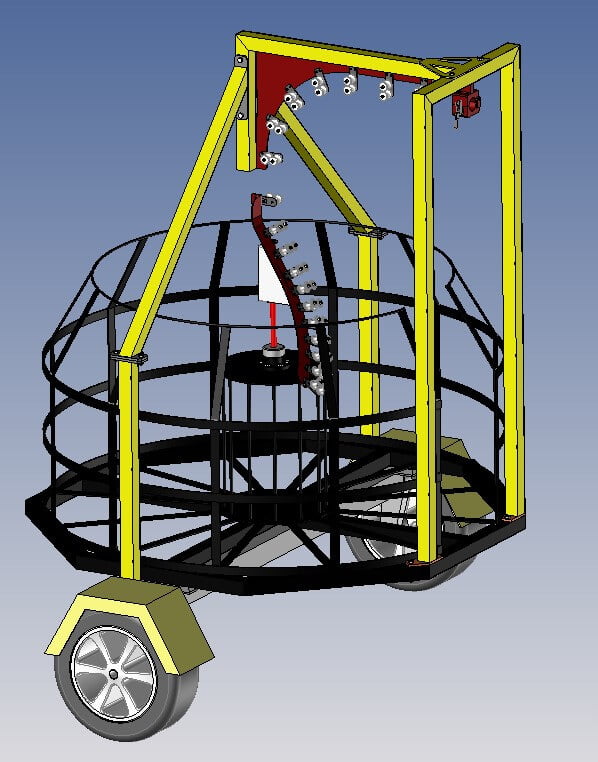
Built around field handling, not just transport
The value of the trailer is not only moving equipment from one location to another. Its main role is to create a controlled storage zone between duct legs. In practical terms, that means the cable remains accessible, better protected and ready to continue through the next section without repeating unnecessary handling steps.
On projects where route continuity matters, the trailer becomes a process tool. It helps crews keep order around the manhole area, maintain cable condition and avoid the chaos that comes from manual storage on the ground.
How a Cable Fleeter Trailer works in multi-leg duct routes
The typical workflow is simple: install the first duct leg, feed the remaining cable into the fleeter, then continue blowing into the next section with the same cable end. The datasheet visuals show this concept with a cable drum, cable blower, duct coupler and the trailer working together on a staged route.
1
Blow the first leg
Start the installation with a suitable machine such as FOK, MiniFOK or, for heavier work, HidroFOK.
2
Transfer the cable balance
After the first section is completed, take the remaining cable off the drum and guide it into the trailer cassette through the rotating cable guide quadrant.
3
Keep the cable ready
The cable stays clean, elevated and organized inside the trailer instead of being laid out in loose figure-eight loops around the work zone.
4
Continue into the next duct
Use the same cable end for the second leg and continue the cable blowing process with better control over cable condition and site layout.

Typical installation set-up
- Cable Drum Roller for stable drum feed
- Cable Blowing Machines for the actual installation stage
- Y Connector Jetting Tools where route layout requires related accessories
- Manhole and coupler sections where staged cable continuity becomes important
Practical point: the trailer is especially useful when the route design forces a stop after the first duct leg but the remaining cable still needs to stay protected and ready for immediate continuation.
Technical data and main components
The datasheet defines the Cable Fleeter Trailer as a road-going trailer chassis fitted with a cable storage cassette, rotating cable guide quadrant and duct clamp assembly. It is also listed with braking and towing details for field transport and handling.
Typical storage capacity
Up to 3,000 m of Ø 13 mm cable
Typical drum scenario
Up to 6,000 m drum lengths
Drum diameter range
800 - 1600 mm
Tyres
145 R10
Overall length
3420 mm
Overall width
2300 mm
Overall height
2330 mm
Weight
325 kg
Weight with box
420 kg
Brake type
Interia type brakes with auto reverse
Towing hitch eye
30 mm / 40 mm / 50 mm
Ball type
50 mm
Trailer chassis
Road-going chassis built for transport, positioning and stable support during staged field operations.
Storage cassette
Temporary cable storage area that replaces manual figure-eight handling on the ground.
Guide and clamp assembly
Rotating guide quadrant and duct clamp arrangement used to direct cable into a controlled path.
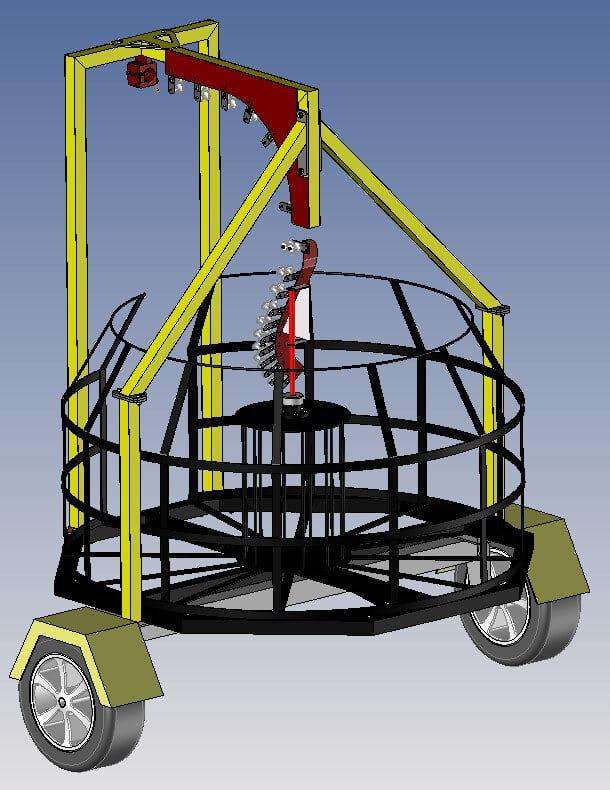
Field-ready dimensional profile
The dimensional layout supports a practical balance between storage volume and transportability. For contractors, this matters because the trailer must not only hold cable efficiently but also remain manageable on live jobsites, roadside work zones and manhole-based underground routes.
If your project has specific towing, access or route constraints, send the expected cable diameter, the planned storage length and the site condition details so the most suitable configuration can be evaluated before quotation.
Where the Cable Fleeter Trailer fits in your installation workflow
A Cable Fleeter Trailer is most useful where route staging is not optional. That includes underground telecom installations with separate duct legs, manholes, road crossings, intermediate chambers, coupler points or situations where the cable must pause between blowing stages without being exposed on the ground.
Best-fit project conditions
- Multi-leg duct routes with planned stop-and-continue installation stages
- Long drum lengths where cable balance becomes difficult to manage manually
- Urban or roadside jobs where site safety and traffic exposure matter
- Projects where cable cleanliness before the next blow is critical
- Installations that need a more professional field process than ground looping
What to share for proper selection
- Cable outside diameter
- Approximate remaining cable length to be stored
- Typical drum size used on site
- Number of duct legs and expected stop points
- Blowing machine model and duct details
- Road access or towing requirements
Frequently asked questions about Cable Fleeter Trailer
Is a Cable Fleeter Trailer a cable blowing machine?
No. It is a trailer-mounted cable storage and handling system used alongside a cable blowing machine. Its role is to store and protect the remaining cable between duct legs.
When is a Cable Fleeter Trailer most useful?
It is most useful on multi-leg underground routes, manhole-based sections, long drum length installations and jobsites where manual figure-eight loops create safety or cable handling problems.
What cable length can the trailer typically store?
The datasheet indicates typical storage up to 3,000 meters of 13 mm cable, with a typical project scenario involving drum lengths up to 6,000 meters.
Why use a fleeter instead of laying cable on the ground?
Ground handling increases the chance of contamination, accidental damage and disorganized work areas. A fleeter keeps the cable elevated, cleaner and more controlled for the next installation stage.
Which UPCOM machines can be used in the same workflow?
The trailer can be planned together with the broader UPCOM range depending on cable and duct requirements, including FOK, MiniFOK and HidroFOK machine configurations.
Request pricing & configuration
Share the basic project data and UPCOM can recommend the right trailer configuration for your cable blowing workflow. Since route staging is the main reason to use this product, the selection should be based on the actual field set-up rather than only on a generic product request.
Send these details
- Cable outside diameter
- Approximate cable length to be stored in the trailer
- Drum diameter or reel information
- Number of route legs and manhole / coupler points
- Blowing machine model used on site
- Site access and towing requirements
Contact
Email: info@upcom.com.tr
Product URL: https://www.upcom.com.tr/products/cable-fleeting-trailer/