



Kucuksu Rasathane
Uskudar Istanbul Turkey

Mon–Fri 09:00–18:00 (GMT+3)
Weekend: Closed
UPCOM Telekomunikasyon - Indoor Fiber Optic Cable
I-V(ZN)HH Break SZ Tight Buffer Breakout Cable
I-V(ZN)HH Break SZ tight buffer breakout cable is designed for indoor voice, data and LAN links where direct termination, compact routing and halogen-free fire performance matter. The cable uses 2.0 mm SZ-stranded sub-units around a GRP central strength member, while each breakout element combines a 900 µm tight buffer with aramid yarn for easier handling at the termination point.
This indoor FR-LSZH breakout fiber optic cable is a practical fit for inter-building and intra-building communication, vertical risers, general horizontal applications, fan-out and multi-fiber pre-terminated assemblies.
2-24 fibersbreakout configuration range
FR-LSZHsub-unit and outer jacket
GRP + aramidall-dielectric strength design
-20 C to +60 Cpublished operating range
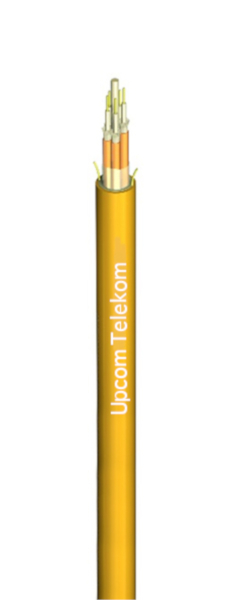
Quick take
Built for easier indoor termination
- 900 µm tight buffers inside 2.0 mm breakout sub-units
- Rip cord under the outer sheath for faster jacket opening
- All-dielectric structure with GRP center member
- Suitable for LAN, WAN, riser, horizontal and fan-out applications
When the project needs direct connector work in the field, breakout construction is usually the better starting point than a denser indoor cable built mainly around compactness.
Why choose I-V(ZN)HH Break SZ tight buffer breakout cable
This design sits in the practical middle ground between compact indoor distribution cables and more protected armored breakout variants. It gives each fiber its own more robust breakout path, which helps when connectors are terminated directly in the field or when a multi-fiber cable must be fanned out cleanly without adding a separate protection workflow.
Termination
Direct connector handling
Tight-buffered fibers and aramid-reinforced breakout sub-units simplify preparation at the end point and reduce the need for extra fan-out accessories in many indoor terminations.
Fire behavior
Indoor FR-LSZH construction
The FR-LSZH jacket structure supports indoor applications where lower smoke and reduced corrosive gas concerns matter more than outdoor UV or burial resistance.
Mechanical logic
Structured but flexible cable core
SZ-stranded sub-units around a GRP central member create a dry, all-dielectric cable that stays easier to route inside risers, cabinets, technical rooms and building pathways.
I-V(ZN)HH Break SZ construction and indoor use logic
Cable layers
Published construction sequence
- Outer sheath
- S/Z twisted sub-units
- Aramid yarn
- Rip cord
- Central strength member (GRP)
- 900 micron tight buffer
- Optical fiber
Why it matters
Field-friendly breakout architecture
Each 2.0 mm breakout sub-unit protects the fiber more effectively than a bare tight-buffered bundle and gives technicians a cleaner working structure during stripping, routing and direct connector fitting. The rip cord improves sheath access, while the all-dielectric GRP plus aramid layout keeps the cable suitable for indoor telecom and data routes where metallic components are unnecessary.
If your project needs metallic armor, rodent resistance or dry outdoor routing, compare this page with the Mini-Breakout Cable. If the priority is a more compact indoor direct-connector cable, review the Premises Distribution Cable.
Applications for indoor breakout fiber optic cable
The I-V(ZN)HH Break SZ platform is best suited to indoor telecom and structured cabling routes where easy end preparation and individual fiber breakout are more important than maximum route density. Typical applications include protected inter-building or intra-building voice/data links, LAN and WAN segments, risers, general horizontal routes, fan-out points and multi-fiber pre-terminated assemblies.
Building cabling
Risers, horizontal routes and equipment rooms
A good fit for indoor runs that move from backbone pathway to room-level termination without switching to a separate fan-out solution at every end point.
Comparison
Breakout vs mini-breakout
Choose breakout when direct termination and indoor FR-LSZH behavior lead the specification. Choose mini-breakout when the route introduces dry outdoor exposure, armored construction or higher mechanical risk.
Assemblies
Patch and fan-out readiness
The construction is useful when the cable will terminate into field connectors, fan-out hardware or compact indoor assemblies such as fiber breakout patch cords.
I-V(ZN)HH Break SZ technical specifications
General
Construction data
- Strength members: Aramid yarns
- Sub-unit diameter: 2.0 mm
- Sub-unit jacket: FR-LSZH
- Identification: Numbers / colors
- Central strength member: GRP
- Outer jacket: FR-LSZH
Mechanical
Published performance values
- Crush resistance: 2000 N (IEC 60794-1-2 E3)
- Temperature range: -20 C to +60 C (IEC 60794-1-2 F1)
- Minimum bending radius: 20 x outer diameter (IEC 60794-1-2 E11)
- Design type: Complete dry, all-dielectric indoor breakout cable
| Fiber count | Weight (kg/km) | Outer diameter (mm) | Tensile load perm / inst (N) |
|---|---|---|---|
| 2 | 47 | 6.8 | 600 / 1000 |
| 4 | 54 | 7.0 | 800 / 1350 |
| 6 | 74 | 9.2 | 1200 / 2050 |
| 8 | 96 | 11 | 1600 / 2700 |
| 12 | 153 | 15 | 2400 / 3500 |
| 16 | 186 | 14.8 | 3200 / 3500 |
| 24 | 210 | 18 | 3500 / 4500 |
Values above are kept aligned with the published datasheet. If you need project-specific confirmation for installation load, routing radius or fiber type, keep the datasheet PDF with the quotation request.
Optical fiber options and compliance
The cable family is offered for both multimode and singlemode applications, which makes it suitable for shorter in-building LAN links as well as longer singlemode building infrastructure routes when the right fiber class is selected.
| Fiber option | Core / cladding | Nominal wavelength windows (nm) | Attenuation max (dB/km) |
|---|---|---|---|
| OM1 | 62.5 / 125 | 850 / 1300 | 3.2 / 1.2 |
| OM2 | 50 / 125 | 850 / 1300 | 3.0 / 1.0 |
| OM3 | 50 / 125 | 850 / 1300 | 2.8 / 0.8 |
| OM4 | 50 / 125 | 850 / 1300 | 2.7 / 0.7 |
| G.652.D | 9 / 125 | 1310 / 1550 | 0.34 / 0.25 |
| G.657A | 9 / 125 | 1310 / 1550 | 0.34 / 0.22 |
Compliance
Referenced standards
- DIN VDE 0888 Part 6
- IEC 61034
- IEC 60332-1-2
- IEC 60754-2
- IEC 60794-1-2
External references
Useful standard pages
IEC 60332-1-2, IEC 60754-2, IEC 61034 and ITU-T G.652 are useful starting points when buyers or consultants need background on the listed standard families.
How to specify the right breakout cable
Confirm the indoor route
Start with the installation environment. This cable suits indoor voice, data, LAN, riser and horizontal routes where FR-LSZH behavior is required and outdoor armor is not the primary need.
Select the fiber count
Choose from 2 to 24 fibers according to room count, link plan, spare capacity and the termination architecture you expect at both ends.
Match the fiber class
Pick OM1, OM2, OM3 or OM4 for multimode building networks, or G.652.D / G.657A for singlemode requirements based on transmission distance and equipment design.
Review termination method
If you want direct connector fitting, field fan-out or pre-terminated assemblies, breakout construction is often the most practical indoor choice because each sub-unit is easier to handle separately.
Check the mechanical envelope
Confirm outer diameter, bending radius and installation load against the pathway, riser hardware, cabinet entry points and pulling practice before release to procurement.
Keep the datasheet with the RFQ
For technical approval and quotation speed, attach the datasheet and specify the requested fiber type, fiber count and application area in the same message.
FAQ about I-V(ZN)HH Break SZ
What is I-V(ZN)HH Break SZ used for?
It is used for indoor voice, data and LAN/WAN routes where individual fiber breakout, direct termination and FR-LSZH fire behavior are needed in the same cable design.
Is this cable suitable for direct connector termination?
Yes. That is one of the main advantages of the breakout structure. Each sub-unit is easier to handle separately than a more compact indoor cable built mainly around density.
Which fiber types are available?
The published options include OM1, OM2, OM3, OM4, G.652.D and G.657A, so the cable can be aligned with both multimode and singlemode indoor network requirements.
What is the difference between this cable and mini-breakout cable?
This page focuses on indoor FR-LSZH breakout design. Mini-breakout is the better comparison point when the project calls for metallic armor, dry outdoor use, rodent protection or higher mechanical resistance.
Is it suitable for riser and general horizontal applications?
Yes. The published application list includes vertical riser and general horizontal use, along with LAN, WAN, fan-out and multi-fiber pre-terminated assemblies.
What should be checked before ordering?
Confirm the installation environment, fiber count, fiber class, termination method, outer diameter and installation load so the cable structure matches the physical route and the active network design.