



Kucuksu Rasathane
Uskudar Istanbul Turkey

Mon–Fri 09:00–18:00 (GMT+3)
Weekend: Closed
Indoor Tight Buffer Breakout Cable
I-V(ZN)HH NX1
I-V(ZN)HH NX1 is a tight buffer breakout fiber cable developed for indoor LAN, vertical riser and general horizontal installations where direct termination, compact construction and LSZH performance matter.
This cable structure uses 2.0 mm breakout sub-units with 900 µm tight buffers and aramid yarn strength members. The result is a practical indoor cable design for inter-building and intra-building voice or data communication, fan-out routing and field termination in controlled indoor environments.
Fiber Count
2 to 24 fibers
Jacket
LSZH outer sheath
Sub-unit
2.0 mm breakout
Temperature
-20 °C to +60 °C
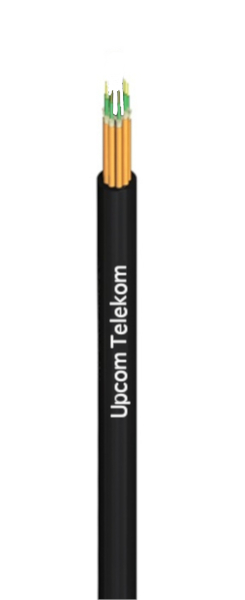
Indoor breakout cable structure with tight buffer elements and LSZH outer jacket.
On this page
I-V(ZN)HH NX1 overview
I-V(ZN)HH NX1 is an all-dielectric indoor breakout cable built for direct fiber termination and organized routing to different locations within the same installation. Each 2.0 mm sub-unit contains a 900 µm tight buffer supported by aramid yarn, while the outer LSZH jacket supports low-smoke and halogen-free indoor use.
Compared with looser indoor cable constructions, this design gives installers a more practical structure for fan-out style routing, structured cabling rooms, equipment links and indoor backbone sections where neat handling and direct connectorization are priorities.
The cable design is well suited to projects that need a compact indoor breakout solution rather than a loose tube construction. It is especially useful where fibers may need to be routed or terminated individually without adding separate fan-out hardware at every point.
Key construction points
- 2.0 mm breakout sub-units
- 900 µm tight buffer design
- Aramid yarn strength members
- LSZH sub-unit jacket and LSZH outer jacket
- Numbers or colors for identification
- Complete dry, non-metallic cable structure
- Ripcord available under the outer jacket
I-V(ZN)HH NX1 applications
Indoor LAN cabling
Suitable for data network cabling inside buildings where compact routing, direct termination and clean organization are needed.
Vertical riser runs
Designed for indoor vertical riser sections where installers want breakout handling instead of a looser central-tube design.
General horizontal routes
Useful in horizontal indoor pathways, ducts and conduits where low-smoke halogen-free construction is preferred.
Inter-building links
Can be used in controlled pathways for inter-building and intra-building voice or data communication where the installation conditions fit indoor cable selection logic.
FTTx support cabling
Supports indoor FTTx sections and local distribution points that benefit from breakout design and manageable sub-unit routing.
Field termination projects
Well matched to applications where direct connector termination in the field is part of the installation plan.
Features and benefits of I-V(ZN)HH NX1
Installation advantages
- Easy stripping and direct termination
- Flexible design with reduced diameter
- Breakout structure helps route fibers to different points
- Non-metallic construction supports dielectric design expectations
- Dry design simplifies indoor handling
Performance and safety advantages
- LSZH structure for low-smoke, halogen-free indoor environments
- Flame-retardant cable concept for building applications
- Aramid yarn reinforcement for tensile support
- Rodent-resistant option can be considered in special versions
- Wide fiber type compatibility from OM1 to G.657A
For broader cable family navigation, see Fiber Optic and Data LAN Cables and the related indoor breakout alternatives linked below.
I-V(ZN)HH NX1 technical specifications
The table below keeps the main selection data visible on the page. For project confirmation, final fiber type, quantity and construction details should always be checked against the latest datasheet revision.
| Property | 2F | 4F | 6F | 8F | 12F | 16F | 24F |
|---|---|---|---|---|---|---|---|
| Strength members | Aramid yarns | ||||||
| Sub-unit diameter (mm) | 2.0 | ||||||
| Sub-unit jacket | LSZH | ||||||
| Identification | Numbers / Colors | ||||||
| Outer jacket | LSZH | ||||||
| Weight (kg/km) | 45 | 52 | 70 | 90 | 115 | 125 | 140 |
| Outer diameter (mm) | 6.6 | 6.8 | 9.0 | 10.5 | 11.0 | 12.5 | 14.0 |
| Tensile load Perm / Inst (N) | 600 / 1000 | 800 / 1350 | 1200 / 2050 | 1600 / 2700 | 2400 / 3500 | 3200 / 3500 | 3500 / 4500 |
| Available optical types | 62.5/125 OM1, 50/125 OM2, 50/125 OM3, 50/125 OM4, 9/125 G.652.D, 9/125 G.657A | ||||||
| Bandwidth (nm) | 850 / 1300 | 1310 / 1550 | |||||
| Attenuation max (dB/km) | 3.2 / 1.2 | 3.0 / 1.0 | 2.8 / 0.8 | 2.7 / 0.7 | 0.34 / 0.25 | 0.34 / 0.22 | |
| Crush resistance | 2000 N (IEC 60794-1-2 E3) | ||||||
| Temperature range | -20 °C to +60 °C (IEC 60794-1-2 F1) | ||||||
| Minimum bending radius | 20 x outer diameter (IEC 60794-1-2 E11) | ||||||
Referenced standards
- DIN VDE 0888 Part 6
- IEC 61034
- IEC 60332-1-2
- IEC 60754-2
- IEC 60794-1 and related test procedures
How to choose the right I-V(ZN)HH NX1 configuration
Selection logic
- Define the required fiber count: 2, 4, 6, 8, 12, 16 or 24 fibers.
- Select the fiber type according to the network design: OM1, OM2, OM3, OM4, G.652.D or G.657A.
- Check whether the route is mainly riser, horizontal, conduit or mixed indoor pathway.
- Confirm the acceptable outer diameter, tensile requirement and bending limitations for the installation route.
- Match the cable to the termination method, patching plan and fan-out needs before final approval.
When to consider alternatives
If the project needs a smaller breakout construction, compare this page with Mini Breakout Cable. If the installation needs a flatter duplex layout or a different breakout geometry, review I-V(ZN)HH 2x1 Flat DX or I-V(ZN)HH Break SZ.
For connector-ready use cases, you may also review Fiber Breakout Patch Cord 4.8 mm if the project scope is closer to finished assembly supply than bulk cable procurement.
FAQ about I-V(ZN)HH NX1
What is I-V(ZN)HH NX1 used for?
I-V(ZN)HH NX1 is used for indoor LAN, vertical riser, general horizontal and structured building cabling applications where tight buffer breakout construction and direct termination are preferred.
Is I-V(ZN)HH NX1 suitable for field termination?
Yes. One of the main advantages of this cable is the breakout structure with 900 µm tight buffers, which supports direct termination and practical fan-out handling in indoor projects.
Which fiber counts are available for I-V(ZN)HH NX1?
The page specification lists 2, 4, 6, 8, 12, 16 and 24 fiber configurations.
Which fiber types can be selected?
Available optical options include OM1, OM2, OM3, OM4, G.652.D and G.657A depending on the project requirement.
What is the temperature range of I-V(ZN)HH NX1?
The listed operating temperature range is -20 °C to +60 °C, and the minimum bending radius is specified as 20 times the outer diameter.