



Kucuksu Rasathane
Uskudar Istanbul Turkey

Mon–Fri 09:00–18:00 (GMT+3)
Weekend: Closed
JV-H Pigtail
JV-H Pigtail is an indoor tight buffer fiber optic cable designed for direct termination, jumper connections and patching points where compact size, easy stripping and LSZH fire performance are required.
This single-fiber indoor pigtail structure supports clean connector assembly, simple routing and cost-efficient installation in telecom rooms, data networks and structured cabling environments. For broader cable families, see our fiber optic and data cable range.
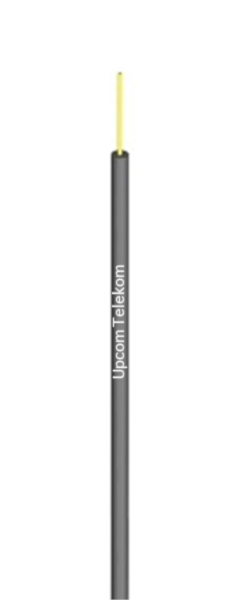
Single-fiber LSZH indoor pigtail for direct termination
On this page
JV-H Pigtail overview
JV-H Pigtail is built around a single coated optical fiber placed inside a 900 micron halogen-free flame-retardant buffer. This construction is practical where the installer needs direct connector termination on one end of the cable without the bulk of multi-fiber indoor constructions.
Compared with larger indoor cable types such as Premises Distribution Cable I-V(ZN)H or Mini Breakout Cable, JV-H Pigtail focuses on compact single-fiber termination work, localized patching and jumper preparation.
If you are comparing basic fiber structures first, our fiber optic cable overview gives a broader starting point before moving into specific indoor cable selections.
JV-H Pigtail applications
Indoor interconnect points
Suitable for indoor cross-connect areas, telecom rooms, cabinet terminations and controlled internal routing where a single-fiber pigtail is required.
Patchcord and jumper preparation
Used in pigtail and jumper connections where direct termination, small handling diameter and low installation complexity are priorities.
Structured cabling support
Works well in building interiors and network rooms that require LSZH jacket performance and clean single-fiber organization.
Compliance and standards
The current page data references EN DIN VDE 0888 Part 2, IEC 61034, IEC 60332-1 and IEC 60754-2. These standards relate to fire behavior, halogen-free performance and smoke characteristics typically expected from indoor LSZH cable constructions.
JV-H Pigtail features and benefits
Easy stripping
The 900 micron buffered construction simplifies handling during termination and connector preparation.
Direct termination
Designed for fast one-end termination work in indoor fiber distribution and patching environments.
Low installation cost
Compact design and straightforward preparation help reduce installation effort and handling time.
Dry, all-dielectric design
A dry non-metallic structure supports simple indoor use where metallic elements are not necessary.
LSZH jacket
Halogen-free flame-retardant buffering makes the cable more suitable for indoor areas with stricter fire behavior expectations.
Single-fiber flexibility
Well suited for individual terminations, repair works, localized transitions and cabinet-side fiber finishing.
JV-H Pigtail technical specifications
| Fiber count | 1 |
| Outer jacket | LSZH |
| Color options | Orange (MM62) / Blue (MM50) / Yellow (SM) |
| Weight | 0.9 kg/km |
| Outer diameter | 0.9 ± 0.05 mm |
| Tensile load | 10 N |
| Maximum length | 8000 m |
| Temperature range | -10 °C to +60 °C (IEC 60794-1-2 F1) |
| Minimum bending radius | 20 x outer diameter (IEC 60794-1-2 E11) |
Technical values above were normalized from the current page content for cleaner presentation.
How to terminate JV-H Pigtail
- Verify the fiber type. Confirm whether the required construction is multimode or singlemode before termination work starts.
- Prepare the cable length. Cut the pigtail to the required working length and keep the routing path clean and protected.
- Strip the buffer carefully. Remove the LSZH outer buffer without damaging the coated fiber.
- Clean and terminate. Perform connector fitting or splicing according to your standard installation procedure.
- Test and label. Check continuity and identification before the pigtail is placed into service.
JV-H Pigtail FAQ
Related pages and technical navigation
For product comparison and broader cable selection, continue with the related pages below.
Mini Breakout Cable
Indoor multi-fiber alternative for direct connector fitting.
Premises Distribution Cable I-V(ZN)H
For compact indoor backbone and distribution routing.
What is MPO Cable?
Useful when comparing single-fiber and multi-fiber connectivity approaches.
Drop Fiber Cable
Explore drop cable options for subscriber-side and access network use.
Fiber Optic and Data Cables
Main cable category page for broader internal linking and selection.
Fiber Optic Cable Overview
General guide for users comparing cable types and applications.