



03 Mar MikroFOK vs ElektroFOK: Micro Cable Blowing Machine Selector
UPCOM • Cable Blowing Machines • FTTH / Microduct
MikroFOK vs ElektroFOK: Which Micro Cable Blowing Machine Should You Choose?
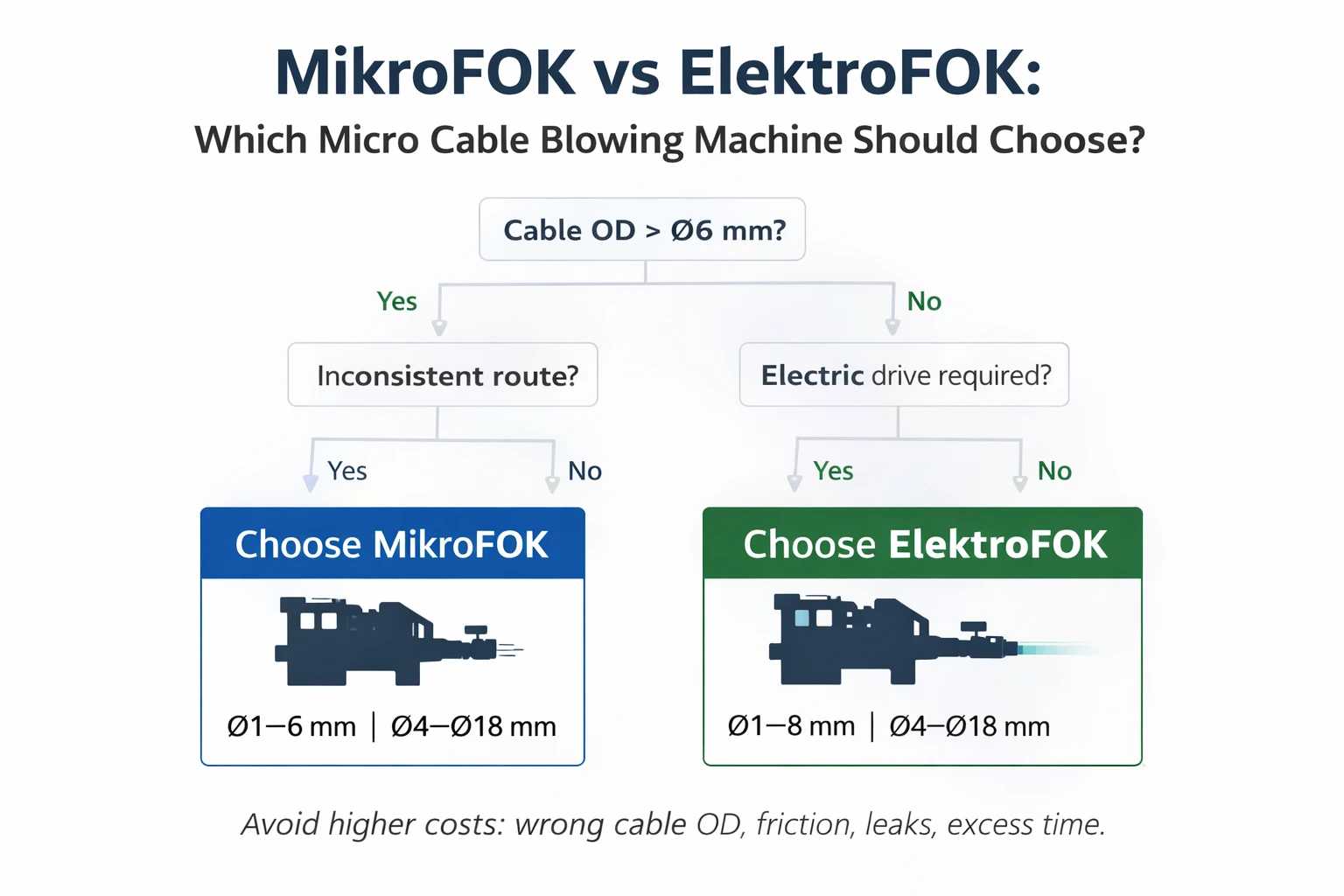
Choosing between MikroFOK and ElektroFOK for microduct work is mostly about control, cable OD, and route friction. This MikroFOK vs ElektroFOK comparison shows when a compact manual setup is enough and when an electric cable blowing machine is the smarter call for consistent feeding and longer runs. If you are installing micro cables in microducts, the wrong choice is expensive: cable damage risk, short distance, leaks, wasted crew time. This page is built for purchase decisions and includes a copy-paste RFQ checklist so we can recommend the right setup quickly.
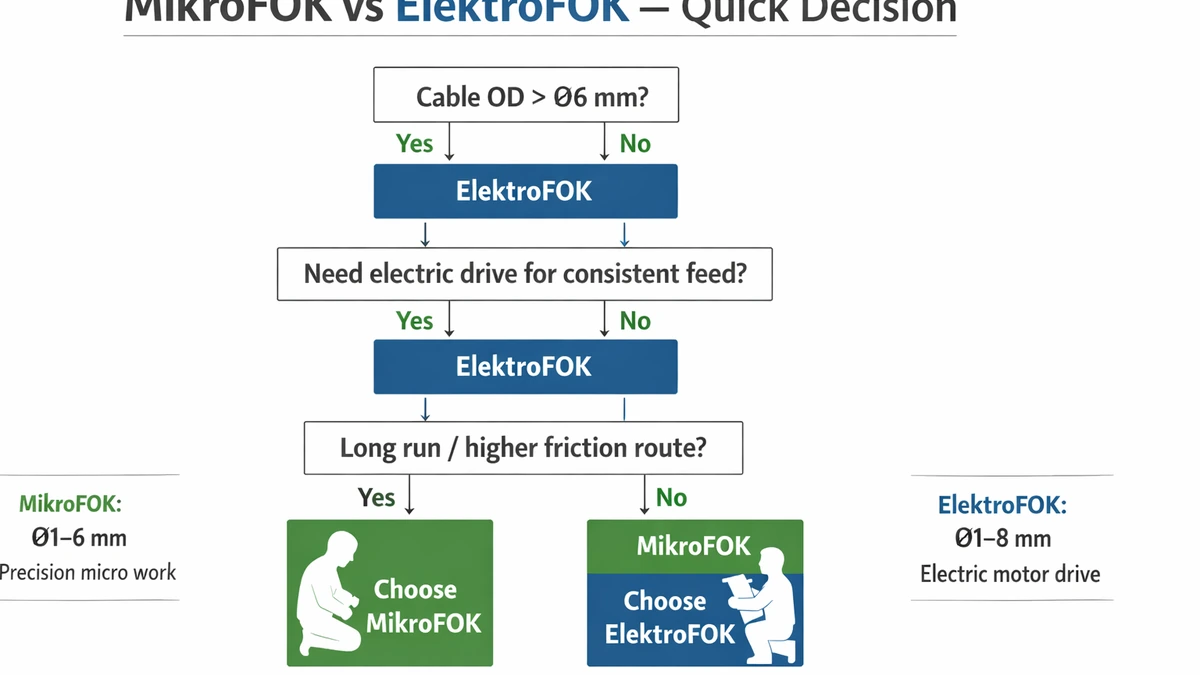
- Choose ElektroFOK if you need electric motor-driven feeding control (stable speed/torque, repeatability, frequent start/stop, consistent feeding).
- Choose MikroFOK if you prefer a simple pneumatic workflow for micro cable blowing in FTTH routes.
- Choosing ElektroFOK for sites with unstable or absent power is wrong. Choosing any setup without proper sealing and duct preparation is also wrong.
Distance depends on duct condition, bends, friction, sealing quality, and compressor output. If you want a confident recommendation, use the RFQ inputs below.
Core Difference: Feeding Control (MikroFOK vs ElektroFOK / Pneumatic vs Electric)
Both models are designed for micro cable blowing in FTTH / microduct infrastructure. The real decision is how you control feeding under changing friction and route conditions.
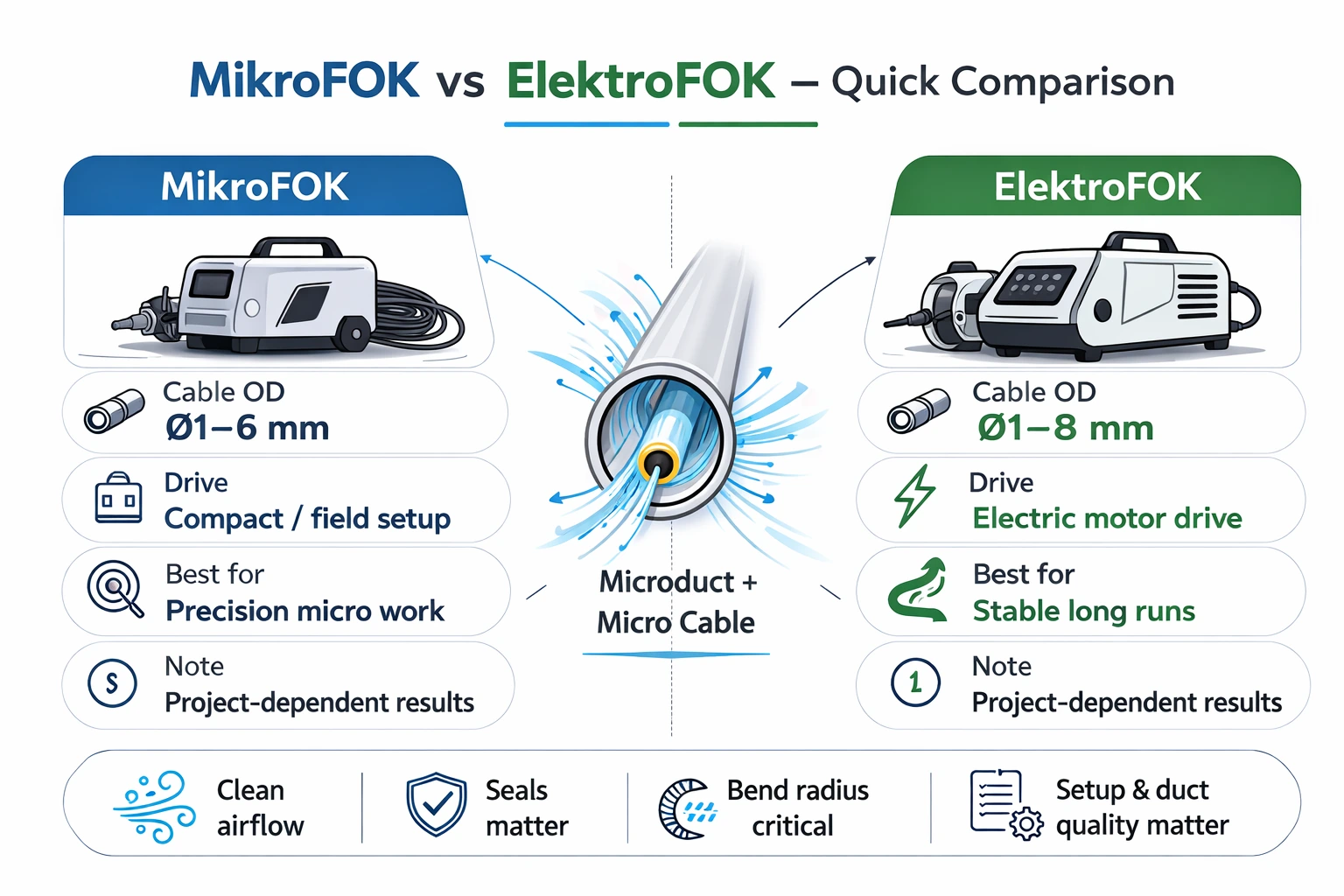
| Decision Factor | MikroFOK | ElektroFOK | What It Means |
|---|---|---|---|
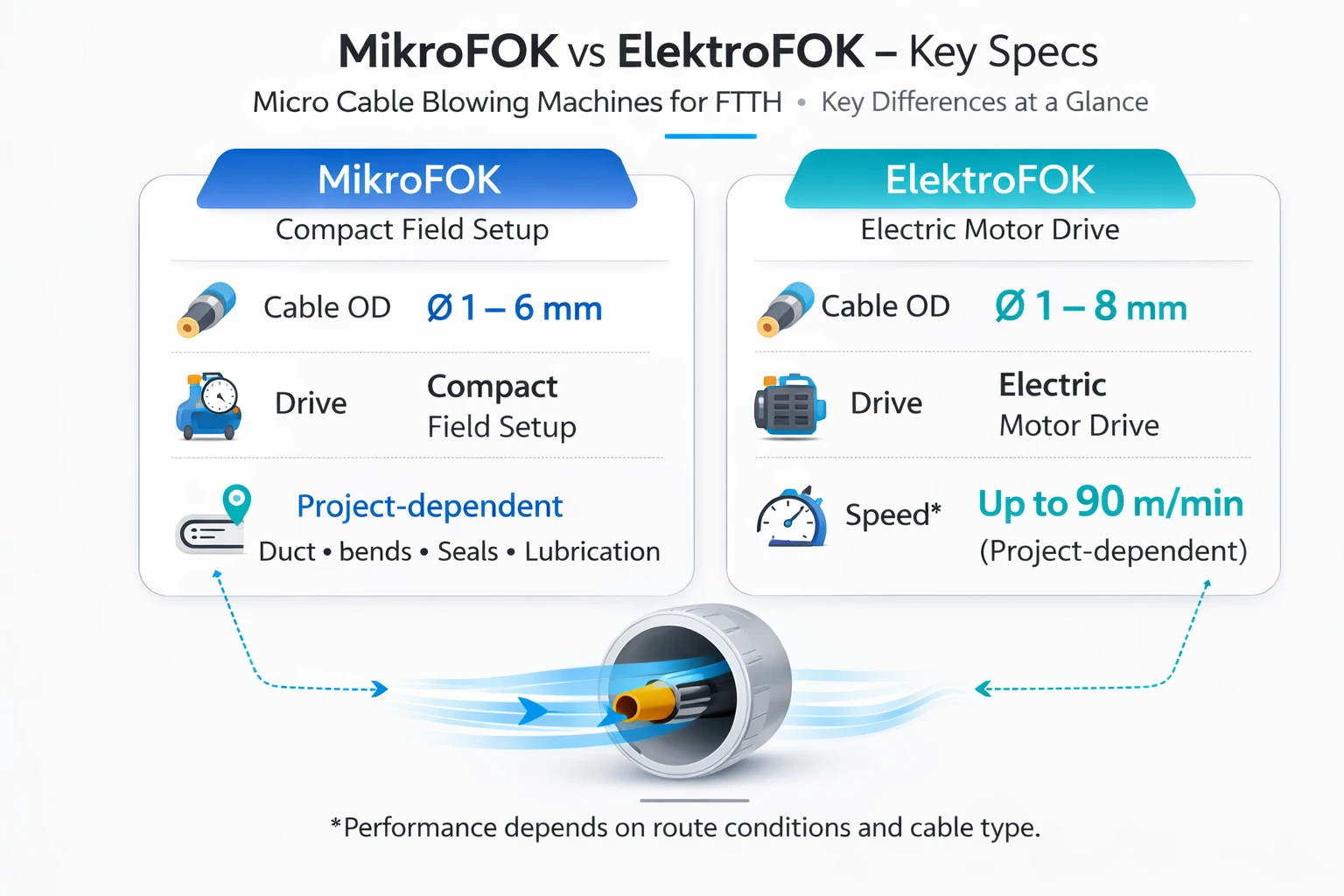
| Feeding drive | Pneumatic feeding control | Electric motor-driven feeding control | If you need repeatable feeding behavior, electric control is the cleaner approach. |
| Cable OD range | Ø1–Ø6 mm micro | Ø1–Ø8 mm micro | If your projects frequently sit near Ø8 mm, ElektroFOK is the safer pick. |
| Duct range | Microduct routes (project-dependent) | Ø4–Ø18 mm ducts | Duct fit and sealing decide distance more than the model name. |
| Typical use | Field work where a pneumatic workflow is preferred | Sites where controlled feeding and repeatability are critical | If operator variability is a problem, ElektroFOK reduces it. |
MikroFOK is the right choice when…
- You prefer a pneumatic workflow in FTTH microduct routes.
- Your cable range is mainly Ø1–Ø6 mm.
- You want straightforward field operation with minimal setup complexity.
Internal link: MikroFOK Cable Blowing Machine
ElektroFOK is the right choice when…
- You need electric motor-driven feeding control for stable, repeatable operation.
- You run frequent start/stop or want consistent feeding under friction changes.
- You install micro cables up to Ø1–Ø8 mm and ducts up to Ø18 mm.
Internal link: ElektroFOK Cable Blowing Machine
Decision Checklist: Avoid the Common Buying Mistakes
These mistakes are not “preferences”. They are wrong in real installations:
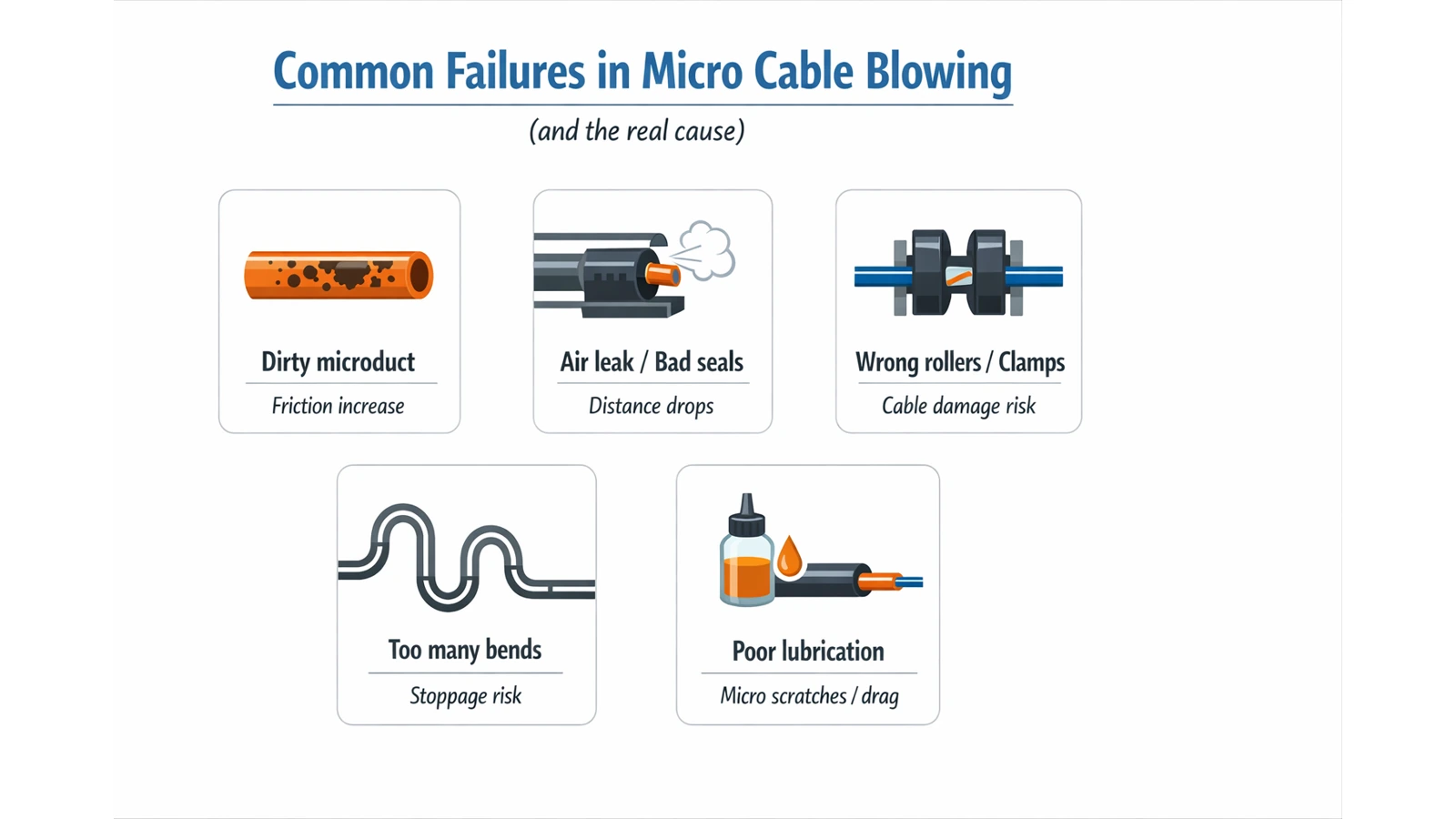
- Wrong: Ignoring friction management. If route friction is high, use a proper cable blowing lubricant (e.g. UP S LUB 20) instead of forcing speed.
- Wrong: “Electric means I don’t need compressed air.” Electric improves feeding control; propulsion still needs proper compressed air and sealing.
- Wrong: “If the cable fits the duct, it will blow.” Route friction, bends, and air leaks decide distance.
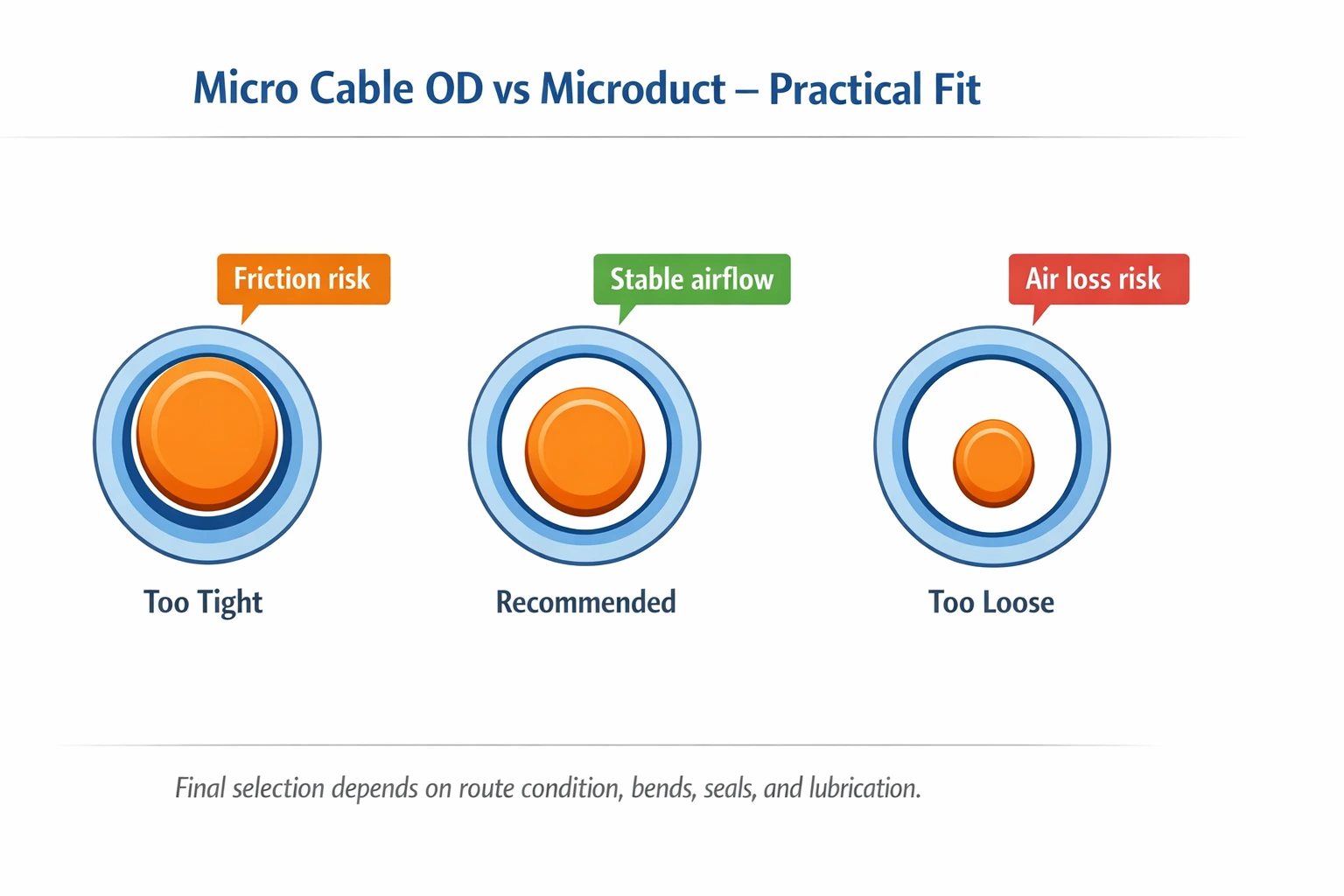
- Wrong: “Bigger duct is always safer.” Too-loose fit increases air loss and can reduce performance.
- Wrong: Buying without confirming your cable OD range and duct ID range.
Internal links: Cable Blowing Machine Selection Guide • All Cable Blowing Machines
What We Need for a Correct Recommendation / Quote (RFQ Inputs)
Send the inputs below and we can recommend the right model + configuration fast. Missing inputs forces guessing, and guessing is how projects waste money.
- Cable OD (mm): min / max and cable type
- Duct size: inner diameter (ID) + material (HDPE, etc.)
- Route length (m): target distance for one shot
- Bends: number of bends + tightest bend radius (or “unknown”)
- Duct condition: new/clean vs old/unknown; any suspected leaks/joints
- Site utilities: compressor availability (if known) + power availability
- Workstyle: indoor/outdoor, crew experience level, portability needs
If you already have the route details ready, you can submit them directly via our Cable Blowing Machine Quote form.
HowTo: Micro Cable Blowing Setup (5 Steps)
This is the minimal workflow that prevents the usual failures: leaks, friction spikes, and cable damage risk.
-
Step 1: Confirm cable OD and select the correct feeding componentsMismatch is the fastest way to damage micro cable or lose distance.Verify cable OD range and use the correct rollers/seals for that diameter before you start.
-
Step 2: Check duct route condition and fix leaks firstAir leaks kill distance. Continuing anyway is wrong.Inspect joints, connectors, and visible damage. If the route is old/unknown, assume dirt and leakage risk until proven otherwise.
-
Step 3: Set airflow and feeding control correctly (do not start aggressive)Start slow, stabilize airflow, then increase feeding gradually.If friction is high, use a proper lubricant such as UP S LUB 20 rather than forcing speed. Starting too fast is how cables get scarred and projects get delayed.
-
Step 4: Run a controlled test blow and monitor consistencyThe first 30–50 m tells you if the route is viable.Watch for slipping, surging, or pressure drops. If you see it, stop and correct the route or sealing.
-
Step 5: Document the working settings for repeatable installationRepeatability is where real cost savings come from.Record cable OD, duct ID, route notes, components used, and the working approach for the next shot.
For installation discipline (handling, route prep, and common failure causes), see: Best Fiber Optic Cabling Installation Practices .
FAQ
What is the main difference between MikroFOK and ElektroFOK?
Which one is better for micro cables close to Ø8 mm?
Do I still need compressed air with ElektroFOK?
What information should I send to get the correct recommendation and quote?
Standards & Terminology (External References)
No pricing is published on this page. For the correct configuration and a fast quotation, use the RFQ inputs section above.