



09 May Cable Blowing Machine work
How Does a Cable Blowing Machine Work?
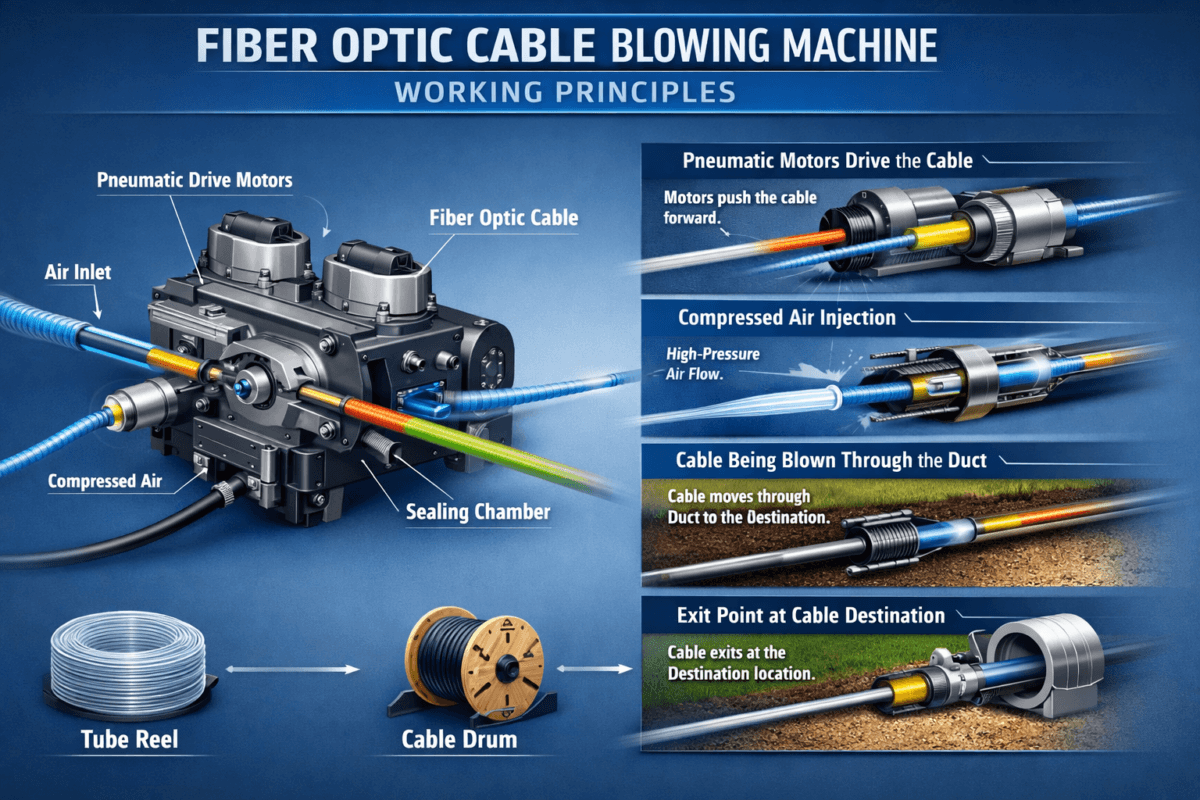
How does a cable blowing machine work? It installs fiber optic cable into a pre-installed duct by combining compressed air with controlled mechanical feed. The air lowers friction inside the duct, while the feeder gives the cable stable forward force without the tension, jacket damage, and installation drag that come with old-school pulling.
This method is widely used in FTTH deployment, backbone routes, campus networks, and metropolitan fiber builds where speed, repeatability, and cable safety matter to the budget as much as the timeline.
On this page
Jump to the section you need without wrecking the layout. A modest engineering miracle.
How Does a Cable Blowing Machine Work in Real Installation Conditions?
A cable blowing machine, also called a cable jetting machine or fiber optic cable blowing machine, is built for installing fiber optic cable into pre-installed ducts and microducts with less mechanical load than conventional pulling. Instead of dragging the cable against the full inner wall of the duct, the machine uses airflow to reduce contact and a belt or roller drive to keep the cable moving at a controlled speed.
That matters because the weak point in many installations is not the cable itself. It is the combination of friction, excessive pushing force, wrong duct-cable match, poor air quality, and bad setup at the machine inlet. When those are controlled, the installation becomes faster, cleaner, and far more predictable.
If you need broader background before the machine stage, see our fiber optics overview guide.
Why the method works
- Compressed air reduces friction along the duct run.
- The feeder supplies stable entry force instead of uncontrolled shove.
- The sealed blowing head keeps pressure where it is useful.
- Lubricant helps the cable jacket glide instead of scrape.
- Proper sizing avoids buckling, slippage, and stalled runs.
Main Parts That Make a Cable Blowing Machine Work
If you want to understand how a cable blowing machine works, start with the main assembly. The result on site depends less on brochure language and more on whether these parts are matched correctly to cable diameter, duct size, route geometry, and compressor output.
Blowing head
This is the pressure chamber where the cable enters the duct. It must be sealed correctly so the machine can use airflow efficiently instead of wasting pressure at the entry point.
Feeder mechanism
Belt or roller feeders move the cable forward at controlled speed. The goal is traction without crushing the cable jacket or flattening the structure.
Air inlet and compressor connection
Compressed air enters the system here. Stable volume and dry air matter more than brute force. Wet or hot air can reduce consistency during long runs.
Cable guides and duct inserts
These keep the cable centered and help prevent scuffing at the machine entry. Wrong inserts are an easy way to ruin an otherwise good setup.
Control unit
Operators manage feed direction, speed, pressure behavior, and stop conditions from the control side of the machine. Controlled installation always beats guesswork.
Meter counter and frame
The frame stabilizes the machine and the counter helps crews track progress, speed, and stoppage points during the run.
Step by Step: How Does a Cable Blowing Machine Work on Site?
The basic logic is simple. The site execution is where people usually manage to ruin a perfectly workable setup. A reliable blowing job follows a sequence.
Prepare the duct and cable
The crew checks the duct route for blockages, sharp bends, water, contamination, and connector issues. Cable diameter and duct size are confirmed before setup.
Set the correct inserts and feed path
The cable is placed in the blowing head, feeder pressure is adjusted, and the duct seal is matched to the actual OD. This is the part people rush and later pretend was not the problem.
Seal the duct and start airflow
Compressed air enters the duct and creates the drag effect that helps move the cable forward. Good sealing keeps the system efficient and stable.
Apply controlled mechanical feed
The feeder pushes the cable at a measured speed while the air carries the load through the duct. The machine should feed, not fight, the cable.
Monitor pressure, speed, and resistance
Operators watch for slippage, sudden resistance, unstable speed, or abnormal tension. These usually point to route friction, wrong setup, or a duct problem.
Finish, inspect, and document the run
Once the cable reaches the target point, the line is checked for jacket damage, route length, and installation consistency before the next section begins.
What this method helps prevent
- Cable stretching caused by excessive pull tension
- Microbending losses caused by pressure and poor handling
- Outer jacket abrasion at the entry point or along the duct
- Installation delays caused by repeated stalls and rework
For a more detailed field sequence, see the fiber optic cable blowing guide and our fiber blowing best practices.
What Affects How Well a Cable Blowing Machine Works?
Blowing distance is never decided by one variable. The machine matters, but route condition and setup matter just as much.
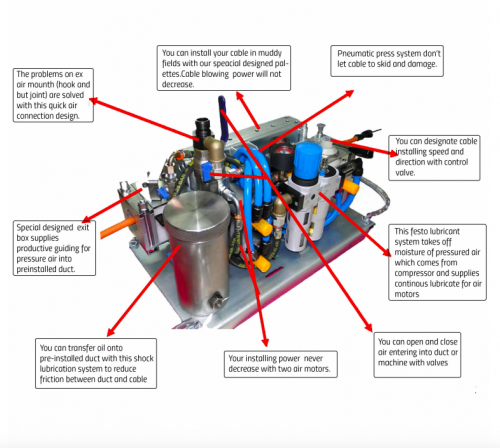
- Duct condition: clean, continuous, correctly joined ducts always perform better than damaged or dirty runs.
- Cable-to-duct match: if the fit is wrong, you lose drag efficiency or risk instability in the duct.
- Bends and route geometry: every extra bend increases resistance and reduces effective distance.
- Air quality: dry, stable compressed air improves consistency. Moisture and heat can work against you.
- Lubrication: the right cable blowing lubricant lowers friction and protects the jacket.
- Operator setup: wrong feeder pressure, wrong inserts, or poor cable alignment can kill the run before the duct does.
| Factor | Good setup | Poor setup | Typical result |
|---|---|---|---|
| Duct cleanliness | Dry, clear, continuous | Dust, water, blockage, rough joints | Better distance and fewer stalls |
| Cable/duct sizing | Matched to machine inserts and route | Too loose or too tight | Stable feed vs slippage or drag loss |
| Compressed air | Stable, dry, adequately cooled | Wet, hot, unstable | Cleaner flow and more predictable output |
| Lubrication | Correct amount and compatible type | None or badly applied | Lower friction vs avoidable jacket wear |
| Operator control | Measured feed and active monitoring | Overfeeding or late response | Smooth run vs buckling or stoppage |
A properly prepared installation can range from a few hundred meters to several kilometers in one operation, depending on cable weight, duct quality, airflow, lubrication, and route complexity. That is why serious crews treat setup as engineering, not ceremony.
Why Cable Blowing Machines Work Better Than Pulling for FTTH Installation
In dense last-mile networks, labor time and rework are usually more expensive than the machine itself. That is why cable blowing is standard in many Fiber to the Home (FTTH) projects.
Lower cable stress
Blowing reduces the tensile load seen in pull-based installation. That helps preserve fiber performance and lowers the risk of hidden damage.
Faster route completion
When ducts are ready, crews can move quickly across repeated sections with consistent installation speed and less manual handling.
Cleaner installation planning
Microduct and FTTH routes benefit from predictable cable handling, easier sectional work, and simpler site logistics.
Lower rework risk
Reducing friction and entry damage lowers the chance of stoppages, jacket scraping, or a second installation attempt.
If you are planning network rollout instead of admiring theory from a safe distance, also review our step-by-step blowing guide and complete cable blowing machine range.
Which Cable Blowing Machine and Accessory Should You Use?
Different projects need different machine classes. One compact FTTH machine does not cover every duct size, cable OD, or route condition.
DrillFOK
Suitable for micro cable jobs and telecom ducts where a practical pneumatic setup is needed.
View DrillFOKMikroFOK
Well suited to FTTH and microduct installation where stable and controlled feeding is the main priority.
View MikroFOKMiniFOK
A practical option for smaller cable ranges when flexibility and compact handling matter.
View MiniFOKHidroFOK
Heavy-duty hydraulic solution for larger cable and duct combinations in tougher field conditions.
View HidroFOKAccessories that improve blowing performance
Air Cooler
The air cooler helps reduce the temperature and moisture level of compressed air before it reaches the machine. That matters in warm climates and longer blowing runs.
Cable Pushing Machine
The cable pushing machine supports cable handling and pre-feeding work, especially where manual feed would slow the crew down.
Y Connector
The Y connector is useful when an additional cable must be installed into an already occupied duct.
ElectroFOK
For compact electric operation, ElectroFOK is another option worth checking for smaller cable and duct combinations.
Frequently Asked Questions About How a Cable Blowing Machine Works
What is a cable blowing machine used for?
A cable blowing machine is used to install fiber optic cable into pre-installed ducts using compressed air and controlled mechanical feed. It is preferred where installers need longer distance, faster installation, and lower cable stress than pulling methods usually allow.
How does a cable blowing machine work without damaging the cable?
It works by reducing friction with airflow and applying controlled feed force at the inlet. Because the cable is not exposed to the same sustained pulling tension, the risk of stretch, jacket wear, and microbending is lower when the setup is correct.
How far can fiber optic cable be blown?
The answer depends on duct quality, cable weight, route geometry, air volume, fill ratio, and lubrication. In practice, some runs are a few hundred meters and others extend to several kilometers when the route and machine setup are right.
Why is lubrication important when a cable blowing machine works?
Lubrication lowers friction between the cable jacket and the duct wall, helps the cable move more smoothly, and improves the chance of achieving longer installation distance without unnecessary jacket stress.
Which industries use cable blowing machines?
Cable blowing machines are widely used in telecommunications, FTTH deployment, data center connectivity, utility infrastructure, campus networks, and backbone installations.
Plan the right setup before the crew reaches the duct
If the cable, duct, machine, air preparation, and accessories are matched correctly, a cable blowing machine becomes a speed tool instead of a troubleshooting machine.