



21 Jan CPR compliant Cables
Fiber cable fire performance
Construction Products Regulation (CPR) for Cables
CPR compliant cables are regulated under the Construction Products Regulation for products permanently installed in buildings and construction works in the EU. In practice, buyers usually need to match the correct fire class, DoP and CE marking path to the actual project requirement.
This revised block keeps the page commercially useful, improves the internal-link path toward your cable cornerstone pages and uses reserved media structure instead of loose images inside paragraphs.

What is CPR for cables?
CPR defines how cables behave in fire conditions when installed in buildings and construction works in the EU. It does not measure transmission performance, bandwidth or attenuation. It focuses on reaction-to-fire performance.
For cable buyers, the useful question is usually not “what is CPR?” but “which CPR class is acceptable for this route and building type?”
How CPR classifies cables
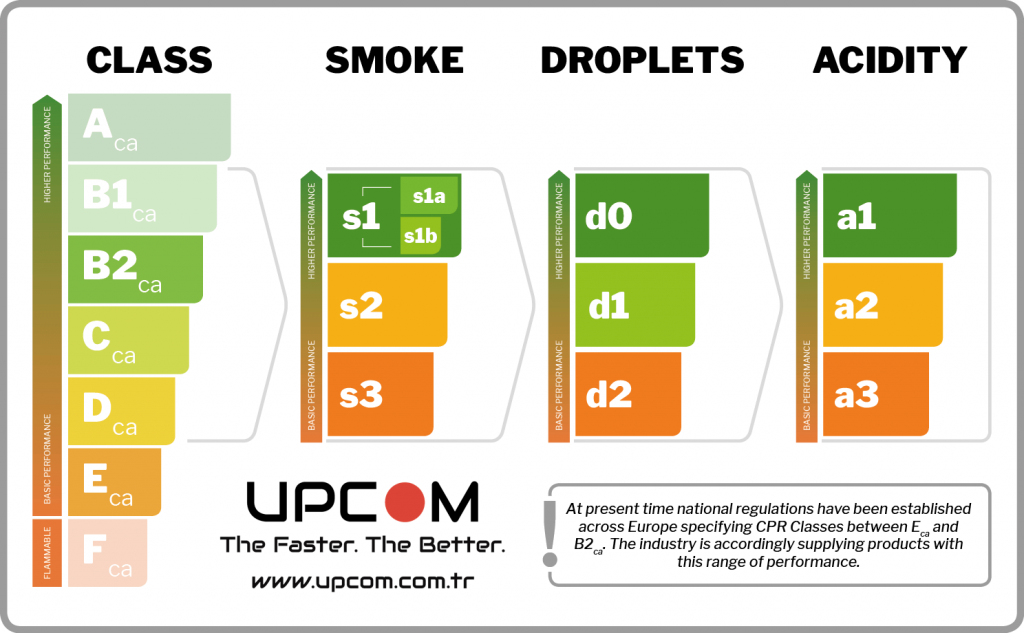
Main Euroclasses
- Aca
- B1ca
- B2ca
- Cca
- Dca
- Eca
- Fca
Additional indicators
- s = smoke production
- d = flaming droplets / particles
- a = acidity / corrosive gases
Example: Cca s1b d0 a1 means Cca fire class, low smoke, no flaming droplets and low acidity.
DoP and CE marking
Typical requirement set
- Declaration of Performance (DoP)
- CE marking with declared Euroclass information
- Relevant AVCP path according to the required class

A typical DoP includes product identification, declared reaction-to-fire performance, manufacturer information and the notified-body path where applicable.
Smoke, droplets and acidity explained
Smoke (s)
Lower smoke performance supports visibility and evacuation conditions during fire.
- s1a / s1b = lower smoke
- s2 = medium
- s3 = no defined stricter limit
Droplets (d)
Shows whether flaming droplets or particles fall during burning.
- d0 = no flaming droplets
- d1 = limited
- d2 = not meeting d0 or d1
Acidity (a)
Represents the acidity and corrosivity of gases released during burning.
- a1 = lower acidity
- a2 = medium
- a3 = no defined stricter limit
How to use CPR in product selection
- Check the country and project specification first. CPR class is not chosen in a vacuum.
- Confirm whether the route is indoor corridor, riser, technical room, backbone or mixed-use.
- Separate fire-performance class from cable construction. A cable can be loose-tube and still need a specific CPR class.
- Ask for DoP and CE path early if the project is document-sensitive.
- Match the jacket and Euroclass to the real application instead of defaulting everything to the cheapest class.
FAQ
Does CPR apply to fiber optic cables?
Yes, if the cable is intended to be permanently installed in buildings or construction works covered by CPR requirements.
Is CPR the same as fire-resistant cable?
No. CPR is a reaction-to-fire classification framework. “Fire resistant” may refer to different endurance or circuit-integrity expectations.
Does B2ca automatically mean the cable is always the right choice?
No. It may be the right fit for stricter projects, but the route, country requirement and cost logic still matter.
What should a buyer request with the quotation?
Target CPR class, application type, country, installation environment and document expectation such as DoP or CE information.