



Kucuksu Rasathane
Uskudar Istanbul Turkey

Mon–Fri 09:00–18:00 (GMT+3)
Weekend: Closed
Indoor Fiber Optic Cable
I-V(ZN)H 12-24 Mini-BreakOUT Cable
I-V(ZN)H 12-24 Mini-BreakOUT cable is a compact indoor LSZH fiber optic cable designed for direct termination, riser routing, backbone links and fiber-to-the-desk installations where space, fire safety and installation speed matter.
This mini breakout construction combines 900 µm tight-buffered fibers, non-metallic strength members and an LSZH outer jacket in one practical indoor cable design. It is well suited for office buildings, campuses, technical rooms, shafts, underfloor pathways and structured cabling projects that need reliable indoor optical distribution without the bulk of larger breakout constructions.
2 to 24 fibers
LSZH jacket
All dielectric
Direct termination
Indoor / riser use
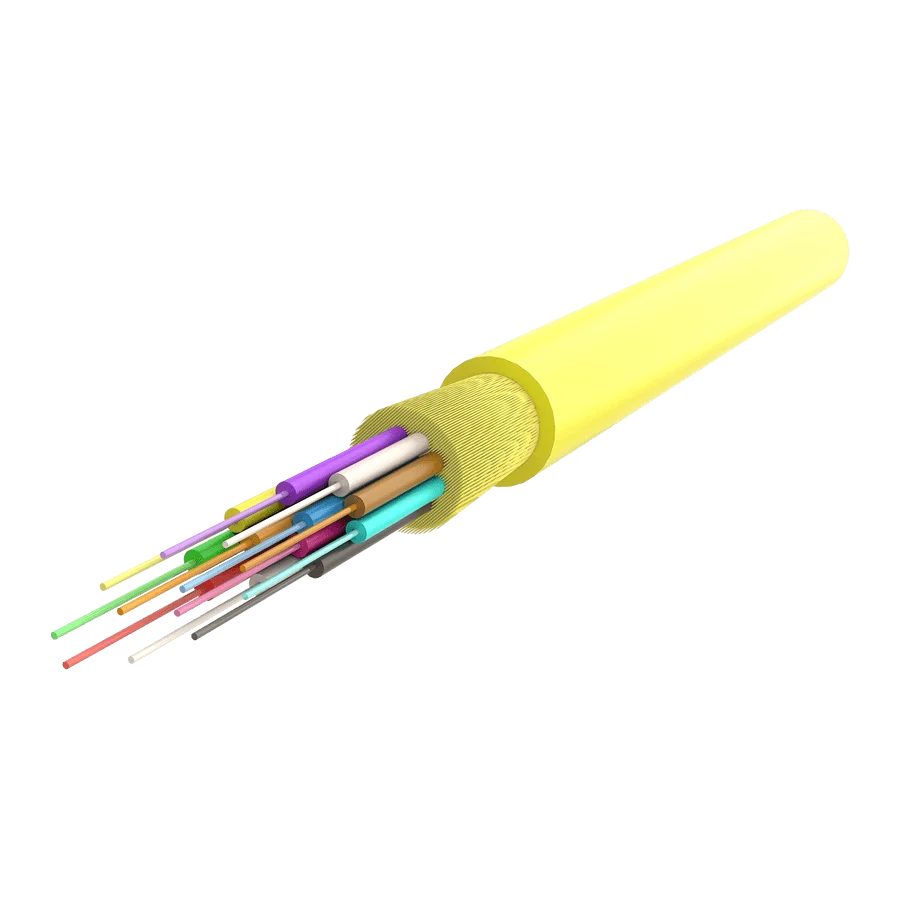
Compact indoor mini-breakout design for direct connector fitting and structured cabling applications.
I-V(ZN)H 12-24 Mini-BreakOUT Cable Overview
The main strength of I-V(ZN)H 12-24 Mini-BreakOUT is installation efficiency. Each fiber is individually protected in a 900 µm tight buffer, which allows direct connector fitting and reduces the need for extra fan-out accessories in many indoor terminations. That helps shorten labor time and keeps indoor backbone and horizontal cabling projects cleaner and faster.
The cable structure is also a strong fit for projects where low smoke and halogen-free material is mandatory. In commercial buildings, hospitals, data centers and public facilities, the LSZH jacket supports safer indoor cable routing while keeping the cable compact and flexible enough for shafts, trays and raised-floor pathways.
For buyers comparing indoor cable families, this model sits between lighter simplex/zipcord options and larger breakout constructions. If you need a broader overview of indoor and outdoor cable families, see our fiber optic and data LAN cables category page and our fiber optic cable overview.
Key construction points
- Available from 2 to 24 fibers
- 900 ± 50 µm tight buffer construction
- LSZH tight buffer jacket and outer sheath
- Strength members: aramid yarns or glass yarn
- All-dielectric and non-metallic design
- Suitable for direct connector assembly
- Designed for indoor, riser and underfloor routing
Where to Use I-V(ZN)H 12-24 Mini-BreakOUT
Typical applications
- Indoor backbone and riser cabling between floors
- Fiber-to-the-desk and high-density office distribution
- Patch, adapter and trunk cable assemblies
- Data rooms, technical rooms and campus buildings
- Underfloor systems and cable shaft installations
- Projects needing halogen-free, gel-free indoor cable routing
When this cable makes sense
- When you need more fibers than a simplex or duplex construction
- When direct termination is preferred to save field labor
- When installation space is limited but moderate tensile strength is still required
- When indoor fire-performance expectations rule out standard PVC jacket designs
If your project is focused on smaller indoor fiber counts, you can also review our I-V(ZN)H 1x1 SX Zip. For broader indoor mini-breakout alternatives, see the mini breakout cable family page. For FTTD and terminal-side routing, the drop fiber cable category can also be relevant depending on route and connector strategy.
I-V(ZN)H 12-24 Mini-BreakOUT Technical Advantages
Installation and handling benefits
- Compact outer diameter improves routing in narrow indoor pathways
- Tight-buffered design supports fast connectorization
- Dry and non-metallic construction simplifies indoor handling
- LSZH sheath is suitable for projects where smoke and corrosive gases must be limited
- Flexible design supports trunking, patching and vertical distribution
Optical platform options
- Multimode options: OM1, OM2, OM3, OM4
- Single-mode options: G.652-D and G.657.A
- Suitable for enterprise, campus and indoor access network designs
- Useful when both compact installation and future maintainability are important
For technical background on fiber cable installation planning, see our fiber optic cable installation guide. If you are comparing cable constructions for termination strategy and indoor routing, this article is also relevant: breakout vs mini-breakout fiber cable.
External references: ITU-T G.652, ITU-T G.657, IEC 60794-1-2.
How to Install I-V(ZN)H 12-24 Mini-BreakOUT
Check the route before pulling
Confirm whether the cable will run in shafts, trays, underfloor channels or indoor riser paths. Tight spaces are usually where a mini-breakout cable gives the biggest advantage.
Select the right fiber count and fiber type
Choose 2 to 24 fibers based on current terminations and future reserve capacity. Match the optical type to the project requirement: OM-series for multimode or G.652-D / G.657.A for single-mode networks.
Protect bend radius during installation
Respect the minimum bending radius of 20 x outer diameter and avoid tight corners, aggressive pulling and unsupported drops inside risers or cabinets.
Terminate cleanly at the destination point
The 900 µm tight-buffered fibers support direct connector fitting. Use correct preparation tools and keep the indoor termination area clean and organized.
Label and test after installation
After routing and termination, identify fibers correctly and verify link performance according to the project test plan before final handover.
I-V(ZN)H 12-24 Mini-BreakOUT Specification
Mechanical specification
| Property | 2F | 4F | 6F | 8F | 12F | 16F | 24F |
|---|---|---|---|---|---|---|---|
| Weight (kg/km) | 26 | 31 | 42 | 48 | 54 | 67 | 85 |
| Outer diameter (mm) | 4.5 | 5.5 | 6.0 | 6.8 | 7.2 | 8.0 | 8.6 |
| Tensile load perm / inst (N) | 400 / 600 | 400 / 600 | 600 / 1000 | 600 / 1000 | 800 / 1200 | 1000 / 1600 | 1200 / 2000 |
General construction
- Strength members: aramid yarns or glass yarn
- Tight buffer diameter: 900 ± 50 µm
- Tight buffer jacket: LSZH
- Identification: colors and black ring colors
- Outer jacket: LSZH
- Crush resistance: 1000 N
- Temperature range: -20 °C to +60 °C
- Minimum bending radius: 20 x outer diameter
- Maximum length: 2000 m
Fiber options
- 62.5/125 OM1
- 50/125 OM2
- 50/125 OM3
- 50/125 OM4
- 9/125 G.652-D
- 9/125 G.657A
Compliance: DIN VDE 0888 Part 6, IEC 61034, IEC 60332-1&2, IEC 60754-2, IEC 60794-1&2
Image detail
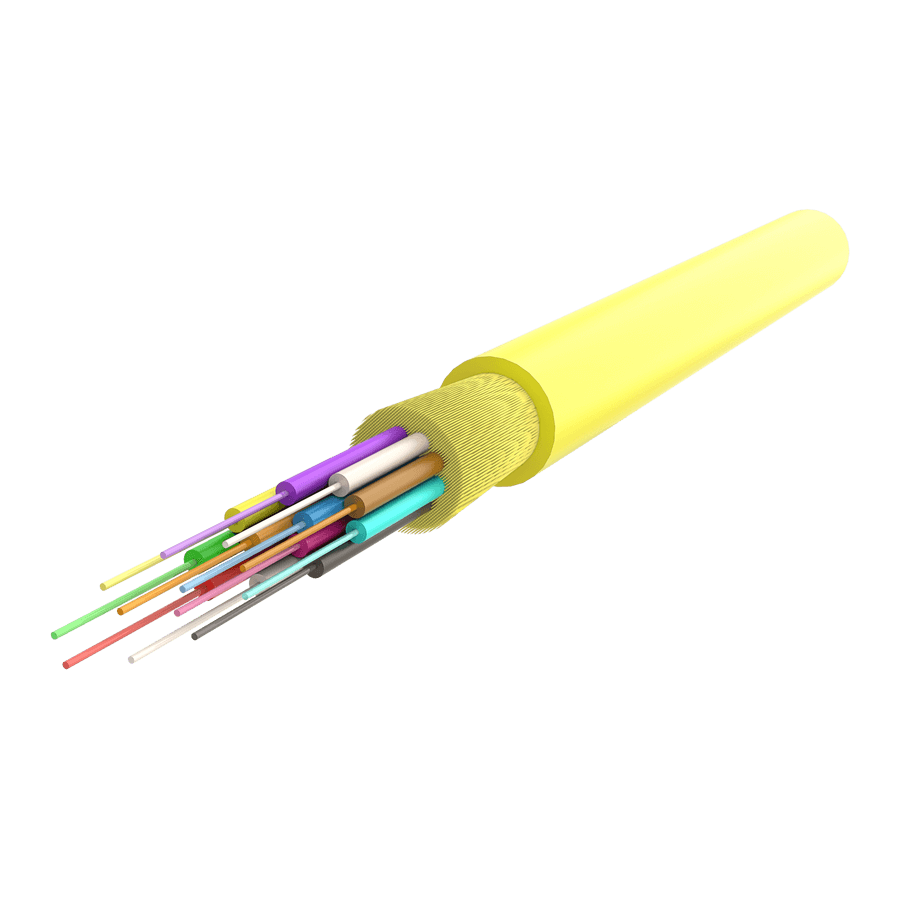
This structure is typically selected when the project needs multiple individually buffered fibers in one compact indoor cable body without moving up to a bulkier breakout format.
FAQ About I-V(ZN)H 12-24 Mini-BreakOUT
What is I-V(ZN)H 12-24 Mini-BreakOUT used for?
It is used for indoor fiber distribution, riser cabling, backbone links, patching and fiber-to-the-desk applications where direct termination and compact routing are required.
Is I-V(ZN)H 12-24 Mini-BreakOUT suitable for direct connector fitting?
Yes. The 900 µm tight-buffered fiber construction supports direct connector assembly, which is one of the key advantages of this cable family.
Is this cable for indoor or outdoor installation?
This model is intended for indoor use. It is commonly installed in shafts, underfloor areas, risers, technical rooms and structured building cabling routes.
Which fiber types are available in I-V(ZN)H 12-24 Mini-BreakOUT?
The cable can be produced with OM1, OM2, OM3, OM4, G.652-D and G.657A fibers depending on the transmission requirement and installation scenario.
What is the difference between mini-breakout and smaller zipcord-style cables?
Mini-breakout designs provide higher fiber counts and a more consolidated indoor structure, while simplex or duplex zipcord constructions are more suitable for lower fiber-count indoor links and patching needs.
Need the right indoor fiber cable for your project?
If you are comparing mini-breakout, drop cable or smaller indoor tight-buffer constructions, review the related pages above and send the project details with fiber count, fiber type and installation route.