



Kucuksu Rasathane
Uskudar Istanbul Turkey

Mon–Fri 09:00–18:00 (GMT+3)
Weekend: Closed
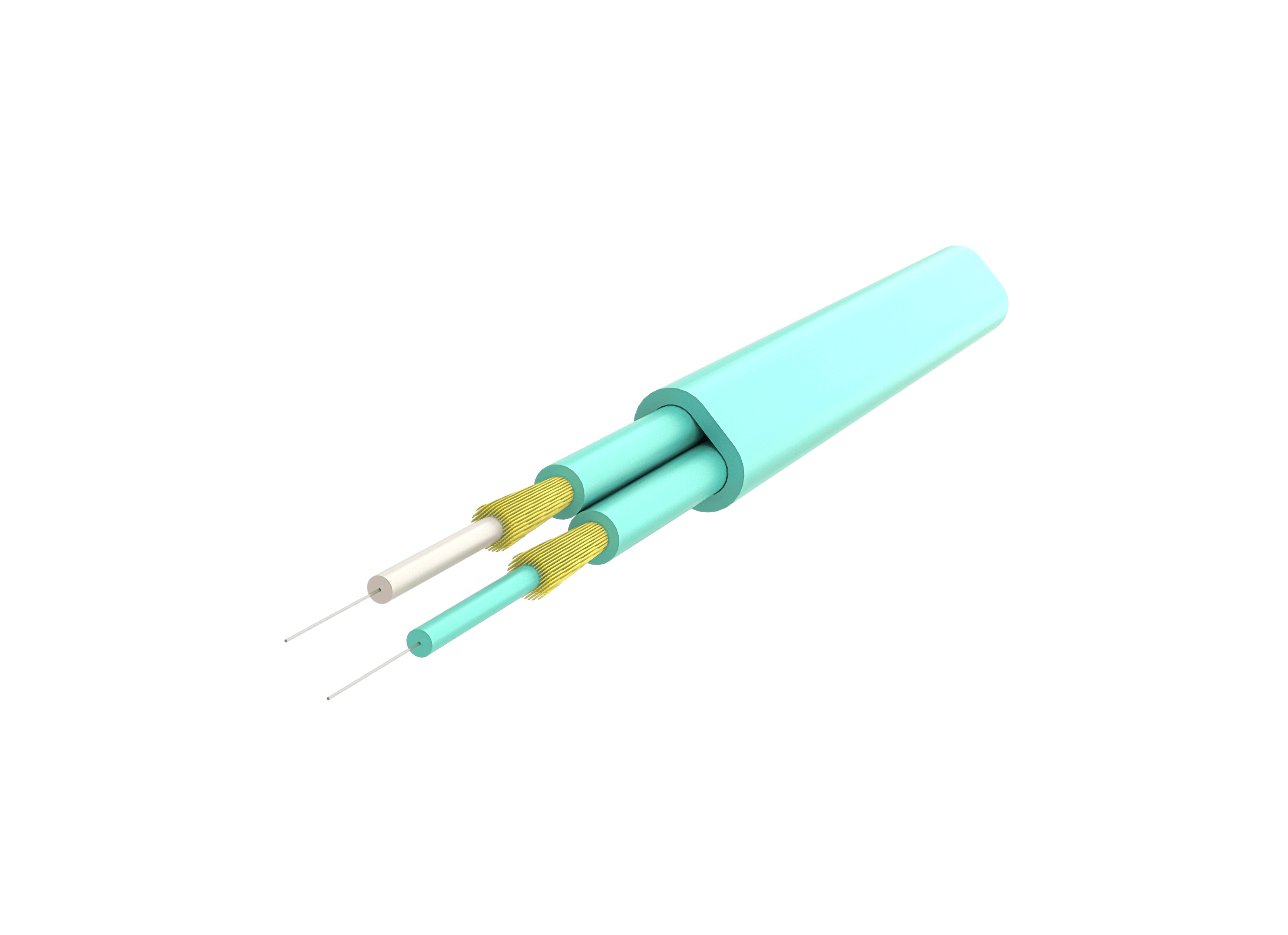
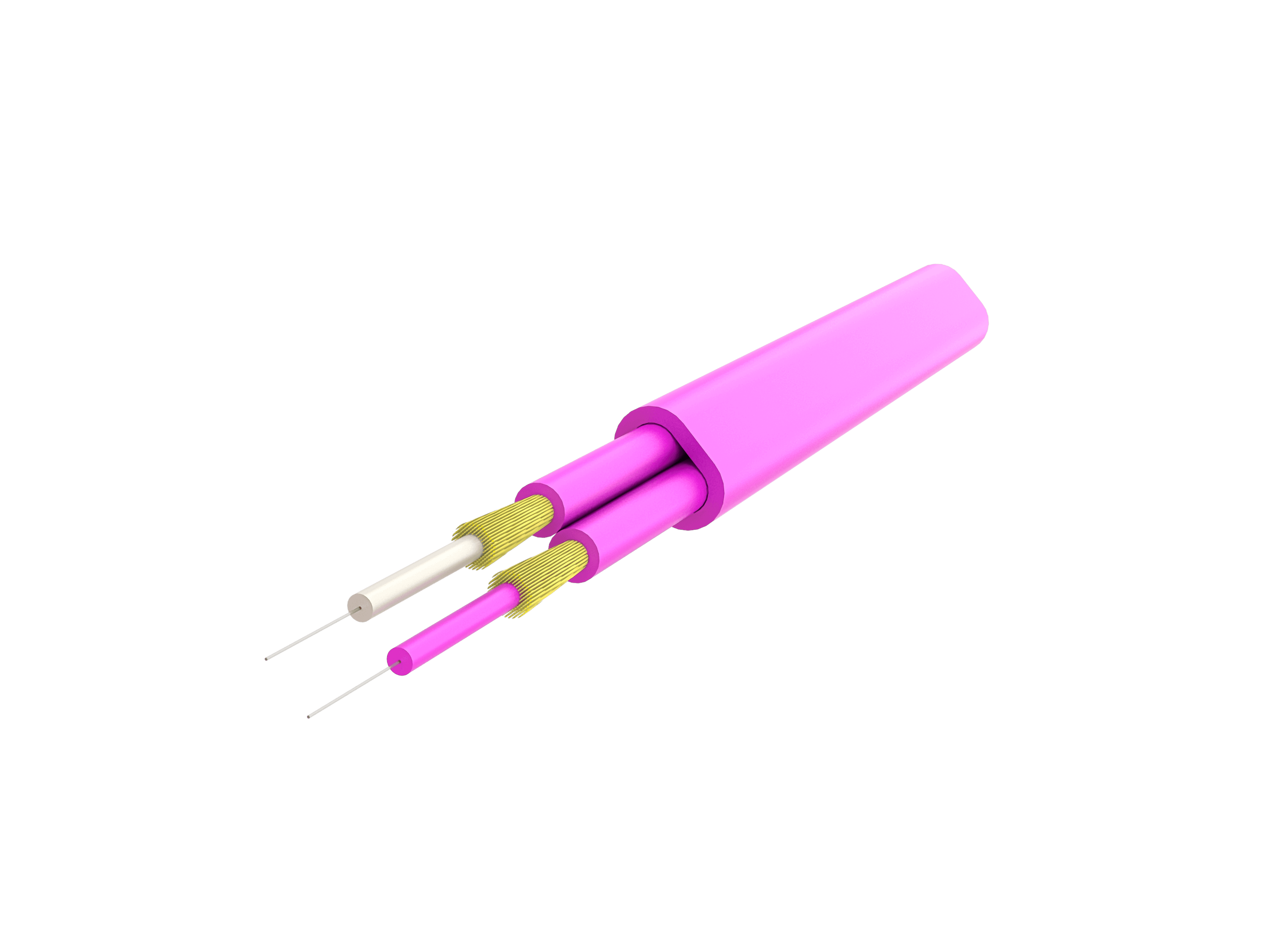
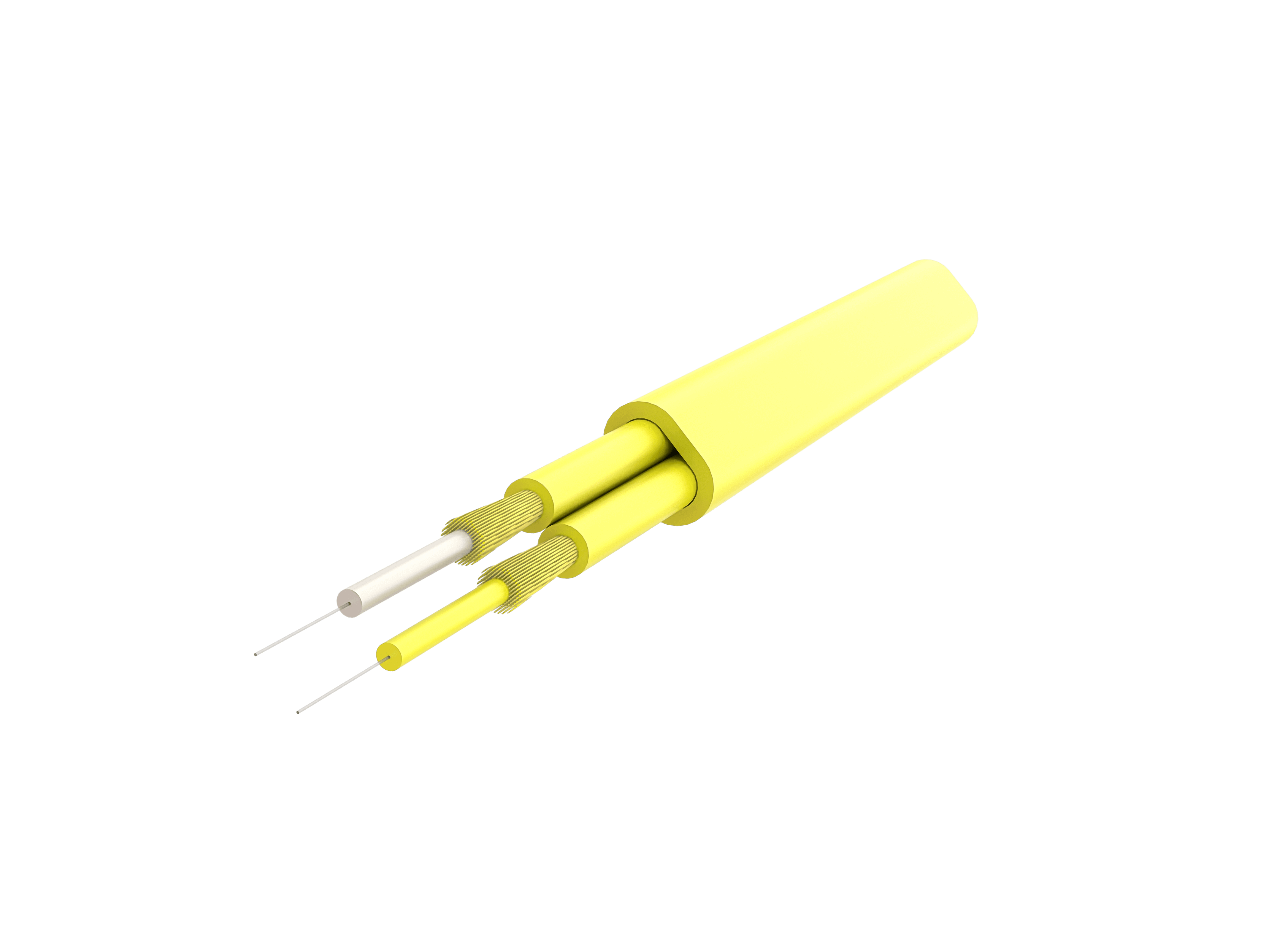
I-V(ZN)HH 2x1 Flat DX | 2x1 Flat Duplex Fiber Optic Cable
2x1 flat duplex fiber optic cable I-V(ZN)HH 2x1 Flat DX is designed for indoor distribution systems, direct terminal connections and FTTH indoor drop routes where neat cable management, low fire load and easy stripping are important. Its parallel duplex construction combines aramid strength members, LSZH jackets and CPR Euro Class Dca performance in a practical indoor cable design.
Indoor tight buffer
2 fibers
LSZH jacket
Aramid yarns
CPR Euro Class Dca
Overview of the 2x1 Flat Duplex Fiber Optic Cable
I-V(ZN)HH 2x1 Flat DX is an indoor tight buffer duplex cable developed for distribution systems, terminal connections, fan-out use, fixed indoor installation and patching environments where a flat profile simplifies routing. Two single-fiber sub-units are laid in parallel, reinforced with non-metallic aramid yarns and protected by LSZH jackets for practical handling in building networks.
The flat format helps create cleaner cable paths inside telecom rooms, work areas and indoor termination points. For adjacent indoor cable families, see J-V(ZNH) 2x1 DX Zipcord, I-V(ZN)HH Nx1 and Mini Breakout Cable.
Why This Cable Works Well in Indoor Fiber Routes
Easy stripping and termination
Well suited to direct connector termination and orderly indoor distributor work where clean preparation matters.
Flat routing profile
The duplex flat shape helps installers manage indoor cable runs more neatly than bulkier alternatives.
LSZH construction
Low-smoke, halogen-free materials support indoor projects where fire behavior and smoke performance are critical.
Broad fiber availability
OM1, OM2, OM3, OM4, G.652-D and G.657A options let one cable design serve multiple indoor network scenarios.
2x1 Flat Duplex Fiber Optic Cable Applications
- Indoor distribution systems
- Direct connection to terminal equipment
- Indoor interconnect and patching environments
- Fan-out arrangements
- FTTH indoor drop cabling
- Fixed indoor installation between terminal distributors and end devices
For higher fiber counts or alternate indoor structures, compare this model with I-V(ZN)HH Break-SZ and Premises Distribution Cable I-V(ZN)H. When the project includes residential access architecture, the wider deployment context is covered in this FTTH guide.
Construction Details and Fiber Options
2x1 flat duplex fiber optic cable construction
The cable combines two parallel sub-units, non-metallic aramid strength members and LSZH sub-unit and outer jackets. This layout supports easy handling, direct termination and clean routing where indoor flexibility and compact installation are priorities.
Fiber choices for this 2x1 flat duplex fiber optic cable
Multimode variants cover OM1, OM2, OM3 and OM4, while singlemode options include G.652-D and G.657A. That makes the same mechanical platform suitable for building LAN backbones, terminal links and indoor FTTH transitions depending on the selected fiber type.
Need broader technical context for cable selection? Link this page naturally to What is fiber optic cable? and to the fire-performance explainer on CPR compliant cables.
2x1 Flat Duplex Fiber Optic Cable Specifications
| Construction and Mechanical Data | |
|---|---|
| Fiber count | 2 |
| Strength members | Aramid yarns |
| Sub-unit jacket | LSZH |
| Outer jacket | LSZH |
| Sub-unit diameter | 2.0 mm / 2.8 mm |
| Weight | 24 kg/km / 32 kg/km |
| Outer dimensions | 3.1 × 6.2 mm / 3.8 × 6.6 mm |
| Tensile load (perm./inst.) | 300/500 N / 400/700 N |
| Crush resistance | 600 N/10 cm |
| Temperature range | -20 °C to +60 °C |
| Minimum bending radius | 20 × outer diameter |
| Fiber option | Core / Cladding | Wavelength (nm) | Max attenuation (dB/km) |
|---|---|---|---|
| OM1 | 62.5/125 | 850 / 1300 | 3.2 / 1.2 |
| OM2 | 50/125 | 850 / 1300 | 3.0 / 1.0 |
| OM3 | 50/125 | 850 / 1300 | 2.8 / 0.8 |
| OM4 | 50/125 | 850 / 1300 | 2.7 / 0.7 |
| G.652-D | 9/125 | 1310 / 1550 | 0.34 / 0.25 |
| G.657A | 9/125 | 1310 / 1550 | 0.34 / 0.22 |
2.0 mm sub-unit
Better suited to compact routing, lighter cable weight and space-sensitive indoor paths where smaller cable management zones are preferred.
2.8 mm sub-unit
A stronger option for projects that benefit from extra handling margin and higher tensile values during installation or repeated access.
Compliance and Fire-Performance References
This cable references EN 50173-1, IEC 60754-2, IEC 60794-1-2, IEC 60793-1-2 and IEC 60332-1-2. For regulatory background and official reference pages, see the Construction Products Regulation (CPR), IEC 60754-2, IEC 60794-1-2 and IEC 60332-1-2.
For project-side internal support, keep one contextual link from this page to CPR compliant cables so the regulation cluster stays connected.
How to Select the Right 2x1 Flat Duplex Fiber Optic Cable Version
- Define the fiber type first. Choose OM1, OM2, OM3, OM4, G.652-D or G.657A according to transmission architecture, connector plan and project distance requirements.
- Check the indoor route. Review cable path density, bend control, installation space and whether the flatter profile will improve cabinet or distributor organization.
- Match fire-performance expectations. Confirm LSZH and CPR needs against the building specification and the project’s declared fire-performance requirement.
- Select the mechanical size. Use the 2.0 mm or 2.8 mm sub-unit option based on the required balance of compactness, handling and tensile margin.
- Verify the final datasheet before approval. Confirm attenuation, dimensions and installation limits in the product PDF before the cable is released to the project BOM.
FAQ
What is I-V(ZN)HH 2x1 Flat DX used for?
I-V(ZN)HH 2x1 Flat DX is used in indoor distribution systems, terminal connections, indoor interconnects, fan-out arrangements and FTTH indoor drop cabling where a flat duplex profile is preferred.
Can this cable be directly terminated with connectors?
Yes. The construction is suited to direct termination with connectors and can also be spliced in terminal distributors where the installation design requires it.
Which fiber types are available?
The cable is available with OM1, OM2, OM3, OM4, G.652-D and G.657A fiber options, so the same cable family can support both multimode and singlemode indoor network needs.
What does CPR Euro Class Dca mean in practice?
It indicates the declared reaction-to-fire class for the cable under the CPR framework. In real projects, the required class must always be matched to the building specification and local standard requirements.
When should I choose the 2.8 mm sub-unit version?
The 2.8 mm option is the better fit when you need more mechanical margin and higher tensile values than the lighter 2.0 mm alternative.