
Multi Loose Tube Metallic Armored Single LSZH Jacket
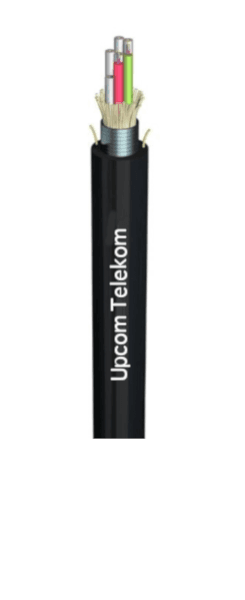
Multi Loose Tube Metallic Armored Single LSZH Jacket cable is designed for outdoor fiber routes that need improved crush resistance, protection against rodent damage and stable performance in ducts, conduits and approved direct-buried installations. The A-DQ(BN)(SR)H-MLT structure combines loose tubes, water-blocking elements, corrugated steel tape armor and an LSZH outer sheath.
This design is suitable for campus backbones, inter-building links, FTTC and FTTB sections, telecommunication trunk routes and other outside plant installations where moisture, impact and handling conditions are more demanding than standard indoor cabling.
On this page
Multi Loose Tube Metallic Armored Single LSZH Jacket cable overview
The cable structure is built around colored loose tubes stranded around a central strength element. Water swelling tape is used between the tubes and the central member to limit water penetration, while swelling glass yarns add tensile support around the core. A corrugated steel tape armor layer improves crush and rodent resistance, and a ripcord under the armor helps make stripping cleaner during installation and preparation.
The LSZH outer sheath is a practical choice when the project requires a low-smoke, halogen-free jacket while still needing outdoor-grade protection. For broader cable families, visit the fiber optic and data LAN cables category. For a technical background on fiber transmission, see fiber optic cable overview.
Depending on the route and project requirement, alternative sheath colors, tube/fiber color options, higher tensile reinforcement and different sheath materials can also be specified. Two-layer tube construction up to 192 fibers is available on request.
Key highlights
- Outdoor loose tube construction
- Corrugated steel tape armor
- LSZH black outer sheath
- Water-blocking tape and dry core support
- Improved crush resistance and protection against rodent damage
- Reference fiber type: 9/125 G.652.D
- Direct burial listed in the datasheet; route verification required
- Reference temperature range: -30°C to +70°C
Where Multi Loose Tube Metallic Armored Single LSZH Jacket fits best
This cable is intended for outside plant and distribution routes where a standard unarmored design may not be enough. It works well where the line may be exposed to pulling stress, contact pressure, rough duct sections or rodent risk.
Telecom trunk lines
Good for primary and secondary distribution, WAN links and inter-building telecom backbone routes.
Campus and facility links
A practical option for campus cabling, FTTB sections and network extensions between buildings.
Duct and direct-buried routes
Suitable for ducts and conduits. Direct-buried use is listed in the datasheet and must be checked against soil conditions, trench design, local requirements and the approved cable configuration.
Multi Loose Tube Metallic Armored Single LSZH Jacket features
Loose tube core
The loose tube design protects fibers from installation stress and supports outdoor network distribution layouts.
Metallic armor protection
Corrugated steel tape armor improves crush resistance and provides additional protection against rodent damage.
LSZH outer sheath
The LSZH jacket supports projects where low-smoke and halogen-free performance is preferred.
Water-blocking design
Water swelling tape and dry-core protection help reduce the risk of moisture travel inside the cable.
UV-resistant outdoor sheath
The black LSZH outer sheath is UV-resistant and designed to resist environmental stress cracking.
Custom configuration options
Tube count, color options, tensile reinforcement and sheath alternatives can be specified according to project scope.
Multi Loose Tube Metallic Armored Single LSZH Jacket reference specification
The values below describe the published 4 × 12-fiber reference configuration. Diameter, weight and mechanical values may change with fiber count, tube layout, reinforcement and sheath selection; verify the final construction on the approved quotation and datasheet.
| Tubes × Fibers | 4 × 12 |
|---|---|
| Outer Diameter | 12 mm ± 1.0 mm |
| Loose Tube Diameter | 2.4 mm |
| Loose Tube Material | PBT |
| Strength Members | Water-blocking glass yarn |
| Armor | Corrugated steel tape armor |
| Outer Jacket | Black LSZH |
| Cable Weight | 165 kg/km |
| Permitted / Installation Tensile Load | 1600 / 2400 N |
| Reference Fiber | 9/125 µm, ITU-T G.652.D single-mode |
| Reference Wavelengths | 1310 / 1550 nm |
| Maximum Attenuation | 0.34 / 0.25 dB/km at 1310 / 1550 nm |
| Crush Resistance | 2000 N (IEC 60794-1-2 E3) |
| Temperature Range | −30°C to +70°C (IEC 60794-1-2 F1) |
| Minimum Bending Radius | 20 × outer diameter (IEC 60794-1-2 E11) |
| Construction Options | Up to 192 fibers, alternative sheath and reinforcement options |
Related cable options and guides
Use the links below to compare sheath type, protection level and structure within the UPCOM cable portfolio.
How to choose Multi Loose Tube Metallic Armored Single LSZH Jacket cable
- Define the installation route. Confirm whether the cable will run in ducts, conduits, approved buried sections or mixed outdoor paths. For direct burial, include soil conditions, trench design, depth and external protection in the review.
- Check mechanical risk. Where rodent exposure, crush load or rough handling is possible, the metallic armored structure becomes more relevant.
- Review sheath expectations. Use the LSZH jacket when low-smoke, halogen-free behavior is preferred over a PE-based outer sheath.
- Match fiber count and construction. Confirm fiber quantity, tube arrangement and any project-specific reinforcement requirement before quotation.
- Validate standards and documentation. Align the cable design, datasheet and route conditions before final approval and ordering.
Standards and compliance
Referenced technical standards include IEC 60754-1, IEC 61034-1 and IEC 61034-2, IEC 60794-1 and IEC 60794-2, ISO/IEC 11801, TIA/EIA-568-C.3 and Telcordia GR-409-CORE. These references do not by themselves establish certification or full compliance for every available construction. Confirm the applicable edition, test scope and project-specific requirements on the approved datasheet and compliance documents.
- For single-mode transmission background, see ITU-T G.652.
- For halogen acid gas test context, see IEC 60754-1.
- For smoke density test context, see IEC 61034-1.
FAQ
Is Multi Loose Tube Metallic Armored Single LSZH Jacket suitable for direct burial?
The published datasheet lists directly buried underground installation as an application. Final suitability must be confirmed against soil conditions, trench design, burial depth, local requirements and the exact ordered construction.
What provides the extra protection in this cable?
The main protective elements are the corrugated steel tape armor, water-blocking components, glass yarn reinforcement and the LSZH outer sheath.
Which fiber type is shown in the reference specification?
The published reference configuration uses 9/125 µm ITU-T G.652.D single-mode optical fiber.
Can the cable be customized?
Yes. Available options include different tube counts, sheath and fiber colors, higher tensile reinforcement and alternative sheath preferences such as L-M-HDPE or LSZH.
When should I compare this design with a PE jacket version?
That comparison matters when the project is deciding between LSZH priorities and a PE-based outer sheath for the route environment and specification language.
Need the right construction for your project?
Share your required fiber count, route type, installation method and sheath expectation. We can help you match the right outdoor cable structure instead of forcing a standard build that does not fit the job.