



Kucuksu Rasathane
Uskudar Istanbul Turkey

Mon–Fri 09:00–18:00 (GMT+3)
Weekend: Closed
Indoor / Outdoor Universal Cable
Universal Fiber Optic Cable – U-DQ(BN)H-CLT
Universal Fiber Optic Cable is a compact central loose tube design developed for indoor and outdoor routing in the same network path. This U-DQ(BN)H-CLT construction combines a gel-filled loose tube, water-blocking glass yarn reinforcement, non-metallic armored protection, and an LSZH outer jacket for access networks, campus links, LAN backbones, and FTTx distribution lines.
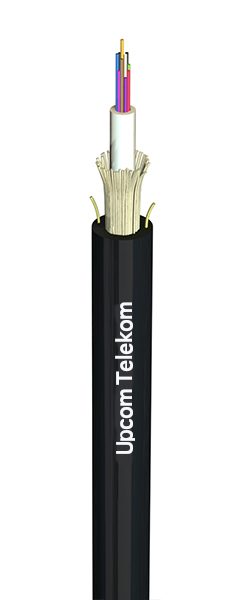
Universal Fiber Optic Cable for Indoor and Outdoor Networks
This Universal Fiber Optic Cable is intended for projects that need one practical cable family across indoor risers, building transitions, campus sections, ducts, conduits, and secondary distribution routes. The structure is especially suitable for lower fiber counts, where installers want a smaller cable diameter, easy routing, dielectric safety, and LSZH performance without moving directly to a heavier metallic armored design.
In practical terms, U-DQ(BN)H-CLT fits networks where installation flexibility matters more than extreme mechanical armor. It is a strong option for inter-building links, customer-side distribution, data communication backbones, FTTB sections, and general-purpose telecom infrastructure where indoor/outdoor continuity simplifies planning and stock management.
Construction
Central Loose Tube
Protection
Non-Metallic Armored
Outer Jacket
LSZH
Typical Fiber Counts
2 to 12 Fibers
Installation Range
Indoor / Outdoor
Universal Fiber Optic Cable Construction and Key Benefits
Why this central loose tube cable works well
- Compact profile for projects where space and bend management matter.
- Gel-filled loose tube helps protect fibers inside the cable core.
- Water-blocking glass yarn adds tensile support and extra protection.
- All-dielectric construction helps avoid electrical or magnetic interference concerns.
- LSZH sheath supports safer indoor use in enclosed environments.
Configuration flexibility
- Alternative sheath, tube, and fiber color options can be specified.
- Higher tensile strength versions can be requested with additional yarn reinforcement.
- Different sheath preferences such as L-M-HDPE or LSZH can be discussed per project.
- An aramid-yarn dielectric strength member version can also be considered when required.
This makes the cable suitable where you need a practical indoor/outdoor transition cable, but not a fully heavy-duty metallic armored backbone cable. For harsher environments or higher crush exposure, a more robust loose tube armored design may be the better choice.
Universal Fiber Optic Cable Technical Specifications
| Property | Value |
|---|---|
| Fiber Counts | 2 / 4 / 6 / 8 / 12 |
| Loose Tube Diameter | 2.9 ± 0.2 mm |
| Loose Tube Jacket | PBT |
| Strength Members | Water Blocking Glass Yarn |
| Outer Jacket | LSZH |
| Cable Weight | 36 kg/km ±5 |
| Outer Diameter | 6.0 mm ±0.5 |
| Max Pulling Load | 1000 N |
| Crush Resistance | 2000 N |
| Temperature Range | -40 °C to +70 °C |
| Fluid Penetration | 3 m sample, 1 m head for 24 hours |
| Minimum Bending Radius | 20 × outer diameter |
Compliance references
The page references IEC 60754-1, IEC 61034-1&2, IEC 60332-1, and IEC 60794-1&2. For users checking standard definitions directly, see the official IEC 60754-1 and IEC 61034-2 pages.
Fiber selection note
Final optical performance depends on the fiber type specified for the project. If the route, distance, connector plan, or network architecture is already defined, the cable can be matched to the required fiber category and installation method more accurately.
Where to Use This Universal Fiber Optic Cable
Inter-building links
Suitable for voice and data communication links between nearby buildings.
Suitable for voice and data communication links between nearby buildings.
Campus and LAN backbones
Practical for secondary distribution and internal telecom trunk routing.
Practical for secondary distribution and internal telecom trunk routing.
FTTB and FTTx sections
Useful where indoor and outdoor continuity is needed in the same route.
Useful where indoor and outdoor continuity is needed in the same route.
Ducts and conduits
Designed for guided installation paths where compact size is an advantage.
Designed for guided installation paths where compact size is an advantage.
How to Select the Right Universal Fiber Optic Cable
- Define the route. Confirm whether the cable will move through indoor rooms, risers, outdoor transitions, ducts, or campus pathways.
- Check fiber count. This construction is typically used for lower counts such as 2 to 12 fibers, making it practical for access, distribution, and customer-side links.
- Review mechanical exposure. If the route has severe crush or impact risk, a heavier armored loose tube alternative may be more suitable.
- Choose the sheath logic. LSZH is usually preferred where indoor fire performance matters, while project-specific sheath requests can be evaluated separately.
- Match the cable to installation and termination. Connector type, distribution hardware, and duct pathway should all be checked before finalizing the structure.
FAQ About Universal Fiber Optic Cable
What is a universal fiber optic cable?
A universal fiber optic cable is designed to be used across indoor and outdoor sections of the same route, reducing the need to switch cable families at building transitions.
Is U-DQ(BN)H-CLT suitable for both indoor and outdoor use?
Yes. This construction is intended for indoor/outdoor use, especially for access, campus, LAN, and FTTx-related installations routed through ducts, conduits, and building transitions.
When should this universal cable be preferred over a heavier armored cable?
Choose this cable when you need a compact dielectric solution for mixed indoor/outdoor routing and lower fiber counts. For harsher routes with higher mechanical stress, a more robust armored loose tube design may be the safer choice.
Can the cable be customized?
Yes. Different sheath, tube, and fiber colors, increased tensile strength options, and alternative sheath constructions can be discussed according to project requirements.
Is this cable suitable for FTTB or campus networks?
Yes. It is well suited for inter-building voice/data communication, secondary distribution, campus backbone sections, and FTTB cabling where one compact indoor/outdoor cable family is preferred.