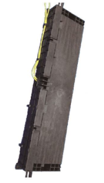
Fiber Optic Connectivity

Fiber Optic Inline Closures

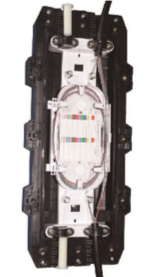
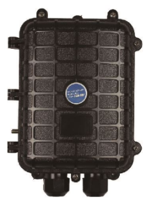
Fiber Optic Inline Closures are used to protect straight-through and branching splices in aerial, underground, wall-mounted and duct network sections. This model range covers compact low-count closures for small repairs and drop connections, as well as higher-capacity versions for mainline distribution, access network branching and FTTH deployment projects.

UPCOM inline splice closures are built to keep fibre routing organized, protect splice points against moisture and mechanical stress, and give installers the right tray and port layout for the cable diameter actually used on site.

  • 4 to 96 fibre capacity
  • Compact to multi-tray options
  • Aerial, buried, duct and wall use
  • Straight-through and branch splicing
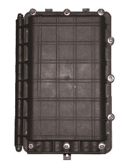
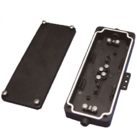
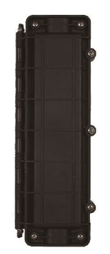
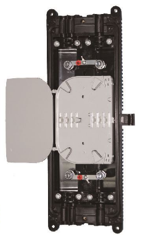
High-capacity inline splice closure for fibre distribution networks
Inline closure range for different network layers Choose compact, mid-size or higher-capacity models based on splice count, tray requirement, cable outer diameter and mounting method.

Fiber Optic Inline Closures for practical splice protection

An inline closure is the right choice when the cable route continues through the enclosure and splice protection has to stay compact, sealed and serviceable. Compared with dome-style alternatives, inline bodies are often preferred where entry and exit direction matters, where installation space is limited, or where a flatter closure layout is easier to mount and maintain.

Broad capacity range

From 4-fibre repair points to 96-fibre multi-tray versions, the series covers both low-count access work and larger distribution links.

Different cable entry options

Depending on the model, round ports support small drop cables, standard access cables and larger feeder diameters.

Flexible mounting

Suitable models can be adapted for hanging, wall mounting or pole mounting, depending on the closure version and accessory set.

Cleaner fibre management

Tray-based layouts keep splices organized, reduce stress on fibre routing and make later service work more controlled.

For projects that need a vertical closure body or a different entry layout, you can also review our Fiber Optic Dome Closure CK-FOSC-144F. If the project includes cabling, cabinets and passive connectivity together, you can move from the UPCOM homepage to related fibre and infrastructure products, or review our company overview first.

Fiber Optic Inline Closures model range

This range includes compact closures for low-count splicing, standard inline units for access networks, and higher-capacity closures with tray-based configurations for heavier distribution work. Optional accessories vary by model and may include hanging hooks, wall mounting kits, pole mounting kits, air valves, grounding devices and SC adaptor accessories.

Compact inline closure for 4-fibre splice protection
UP-ILC-F02

Compact repair and low-count splice closure

Small-format inline closure for very limited splice counts and narrow cable entries.

  • Size: 179 × 72 × 26 mm
  • Splice capacity: 4 fibres
  • Ports: 2 round ports, cable up to Ø6 mm
  • Typical use: small repair points and compact drop-line splicing
Small inline closure for 12-fibre network splices
UP-ILC-F01

Small inline closure for access connections

A straightforward option for lower-count splicing where compact dimensions still matter.

  • Size: 300 × 107 × 38 mm
  • Splice capacity: 12 fibres
  • Ports: 4 round ports, cable up to Ø10 mm
  • Typical use: access points, indoor-outdoor transitions, light branching
Inline closure for higher fibre-count branch splicing
UP-ILC-102

Higher-capacity inline closure for mainline branching

Suitable where splice count increases and different round entry diameters must be considered.

  • Size: 400 × 185 × 90 mm
  • Splice capacity: 96 fibres
  • Ports: round entry options up to Ø16 mm and Ø13 mm
  • Typical use: larger branch points and feeder-to-distribution splicing
Four-tray inline splice closure for distribution networks
UP-ILC-106

Four-tray distribution closure

A balanced choice for 96-fibre applications that need tray-based organization and standard round ports.

  • Size: 432 × 186 × 100 mm
  • Splice capacity: 96 fibres / 4 trays
  • Splice tray: UP-TRAY-X3
  • Ports: 4 round ports, cable up to Ø16 mm
Inline closure with four trays for fibre branching and routing
UP-ILC-101

Compact-body 96-fibre closure with tray layout

Good where tray management is needed but the closure footprint should remain relatively controlled.

  • Size: 280 × 200 × 90 mm
  • Splice capacity: 96 fibres / 4 trays
  • Splice tray: UP-TRAY-023
  • Ports: cable entry up to Ø14 mm and Ø12 mm depending on port
Large inline closure for 96-fibre tray-based splicing
UP-ILC-103

Large-format tray closure for heavier access work

Designed for higher-count projects where more tray organization and broader cable entry sizes are needed.

  • Size: 323 × 202 × 86 mm
  • Splice capacity: 96 fibres / 8 trays
  • Splice tray: UP-TRAY-023
  • Ports: round cable entry options up to Ø20 mm, Ø16 mm and Ø13 mm
48-fibre inline closure with SC adapter accessory option
UP-ILC-502

48-fibre inline closure with adapter accessory option

A practical mid-capacity unit where tray layout and optional adaptor accessories may be useful.

  • Size: 323 × 202 × 86 mm
  • Splice capacity: 48 fibres / 4 trays
  • Splice tray: UP-TRAY-037
  • Ports: round cable entry options up to Ø20 mm, Ø16 mm and Ø13 mm
Slim inline closure for 48-fibre access network splicing
UP-ILC-131

Slim inline closure for access and branching

Long-body inline format for moderate splice counts with standard wall-mount accessory compatibility.

  • Size: 420 × 127 × 72 mm
  • Splice capacity: 48 fibres / 2 trays
  • Ports: 4 ports, one cable per port up to Ø16 mm
  • Typical use: access distribution routes and wall-mounted branches
Multiport inline closure for drop cable distribution points
UP-ILC-132

Multiport drop distribution inline closure

Built for low-count fibre splicing where multiple drop-style ports are part of the connection layout.

  • Size: 643 × 175 × 76 mm
  • Splice capacity: 8 fibres
  • Ports: mixed ports for Ø16 mm, Ø8 mm and Ø3 mm / 3×2 drop cable entries
  • Typical use: FTTH drop distribution and subscriber branching points

Fiber Optic Inline Closures comparison table

Use this table when you need a fast model shortlist before checking exact cable structure, splice count and mounting method.

ModelSplice capacityTrayPort / cable entry summaryBest fit
UP-ILC-F024 fibres-2 round ports, up to Ø6 mmCompact repair and very low-count splicing
UP-ILC-F0112 fibres-4 round ports, up to Ø10 mmSmall access closures and short branch sections
UP-ILC-10296 fibres-Round port options up to Ø16 mm and Ø13 mmHigher-count branch and feeder distribution work
UP-ILC-10696 fibres / 4 traysUP-TRAY-X34 round ports, up to Ø16 mmTray-managed distribution splicing
UP-ILC-10196 fibres / 4 traysUP-TRAY-023Entries up to Ø14 mm and Ø12 mmCompact-body 96-fibre tray layout
UP-ILC-10396 fibres / 8 traysUP-TRAY-023Round entry options up to Ø20 / Ø16 / Ø13 mmLarger tray count and broader cable range
UP-ILC-50248 fibres / 4 traysUP-TRAY-037Round entry options up to Ø20 / Ø16 / Ø13 mmMid-capacity closure with accessory flexibility
UP-ILC-13148 fibres / 2 trays-4 ports, one cable per port up to Ø16 mmAccess network branches and wall-mounted routes
UP-ILC-1328 fibres-Mixed ports for feeder and drop cable entriesFTTH drop distribution and subscriber connections
Accessory sets are not identical across the range. Some models support only hanging hooks, while others can also take wall mounting kits, pole mounting kits, air valves, grounding devices or SC adaptor accessories. That matters in real projects because tray count alone does not tell you whether the closure is the right fit for the intended mounting method.

Fiber Optic Inline Closures applications

Inline closures are usually selected where splice protection has to follow the cable path cleanly and where installers need a predictable entry-to-exit route for feeder, distribution or drop cables.

Aerial access networks

Useful on poles or suspended routes where a straight-through body is easier to position, secure and reopen during maintenance work.

Underground and duct networks

Suitable for handholes, chambers and protected buried sections where reliable sealing and organized tray routing are required.

Wall-mounted distribution points

Relevant for building entry points, riser transitions, indoor-outdoor handover sections and protected service zones.

FTTH branch and drop work

Low-count and multiport versions help manage customer-side branching and smaller distribution tasks without oversized hardware.

If your installation plan includes both outside plant splicing and cabinet-side termination, review our guide on choosing a 19 rack cabinet. For cable selection and network build context, you can also review our fiber cable range.

How to choose Fiber Optic Inline Closures

Start with the actual project constraint, not just the highest splice capacity on the table. The right closure is the one that matches fibre count, cable outer diameter, entry layout, mounting method and future maintenance access at the same time.

  1. Define the real splice count. Do not oversize blindly. A 4 to 12 fibre closure is enough for many repair and subscriber-side tasks, while feeder or distribution points may need 48 or 96 fibres.
  2. Check the cable outer diameter at each entry. Port compatibility is one of the first elimination points. A closure may have enough tray capacity but still be wrong for the actual feeder cable diameter.
  3. Confirm straight-through, branch or drop layout. Some projects need simple pass-through splicing, others need multiport drop distribution or mixed feeder and branch entries.
  4. Decide the mounting method early. Hanging hook, wall mounting kit and pole mounting kit availability depends on the model. Do not leave accessory compatibility for the end.
  5. Plan service access. If later re-entry, adaptor accessories or grounding details matter, choose the version that supports them from the beginning.
For broader network planning, our FTTH installation technologies page helps position where inline closures sit in the full deployment chain, from cable routing to splice management and subscriber connection.

Fiber Optic Inline Closures FAQ

What is the difference between an inline closure and a dome closure?
An inline closure routes the cable through opposite sides of the enclosure, which makes it practical for straight-through and many branch layouts. A dome closure uses a different body format and may be preferred when the project calls for that entry arrangement or a different expansion style.
Which Fiber Optic Inline Closures support 96 fibres?
In this range, UP-ILC-102, UP-ILC-106, UP-ILC-101 and UP-ILC-103 cover 96-fibre capacity, but they do not share the same tray, body size or cable entry layout. Selection should be based on the full application, not only the fibre count.
Are mounting accessories included as standard?
Not always. Depending on the model, some accessories are optional and excluded from the basic set. Typical optional items include hanging hooks, wall mounting kits, pole mounting kits, air valves, grounding devices and SC adaptor accessories.
Can these closures be used in aerial and underground installations?
Yes. The inline closure range is intended for aerial, underground, wall-mounted and duct-related applications, provided the chosen model matches the cable entry size, splice count and installation method.
Which model is better for FTTH drop-style distribution?
For drop-oriented layouts, UP-ILC-132 is the most application-specific option in this list because it includes mixed port arrangements suited to smaller drop cable handling. For very low-count compact splicing, UP-ILC-F02 and UP-ILC-F01 can also be relevant depending on the route.
Do all models use splice trays?
No. Some models are listed without a tray reference, while others use dedicated tray codes such as UP-TRAY-X3, UP-TRAY-023 or UP-TRAY-037. Tray requirement changes with the closure design and target splice capacity.

Useful links for project planning

Need the right inline closure for your project?

Share the splice count, cable outer diameter, mounting method and whether the application is straight-through, branch or drop distribution. That is enough to narrow the correct closure family quickly without drifting into the usual catalogue chaos humans seem to enjoy creating.