



Kucuksu Rasathane
Uskudar Istanbul Turkey

Mon–Fri 09:00–18:00 (GMT+3)
Weekend: Closed
Outdoor Fiber Optic Cable
Multi Loose Tube Metallic Armored Single PE Jacket Cable
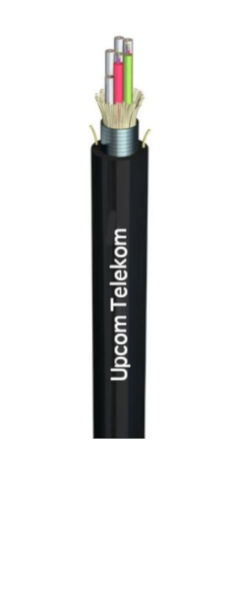
Multi Loose Tube Metallic Armored Single PE Jacket cable is designed for outdoor fiber networks that need stronger mechanical protection, stable long-term performance and reliable water blocking in ducts, conduits and direct buried routes. This structure combines loose tube design, corrugated steel tape armor and an HDPE outer sheath for demanding outside plant installations.
It is a practical choice for inter-building links, campus backbones, WAN infrastructure, FTTB and FTTC projects where crush resistance, rodent protection and environmental durability matter more than a light indoor-focused structure.
Up to 244 FO
High fiber count structure
Steel Tape Armor
Extra crush and rodent protection
HDPE Sheath
UV and outdoor durability
Direct Buried
Suitable for harsh OSP routes
Overview of Multi Loose Tube Metallic Armored Single PE Jacket
This Multi Loose Tube Metallic Armored Single PE Jacket construction uses colored loose tubes stranded around a central strength element. The interstices are protected with water swelling tape to limit water penetration, while swelling glass yarns support tensile performance. Over the core, corrugated steel tape armor adds mechanical protection and rodent resistance, and the final HDPE sheath improves UV stability and outdoor durability.
The current structure is available up to 244 fibers, with each loose tube carrying up to 24 fibers. For higher-count designs, a two-layer tube construction is available up to 192 fibers. Depending on project conditions, sheath, color and tensile reinforcement options can also be adapted.
For broader category context, see fiber optic and data LAN cables. For technical background, also review what fiber optic cable is and the fire-performance guide on CPR compliant cables.
Multi Loose Tube Metallic Armored Single PE Jacket Cable Construction
Loose Tube Core
Colored loose tubes are arranged around the central strength member to keep fibers organized and protected for outside plant use.
Water Blocking Design
Water swelling tape and water blocking elements help reduce the risk of longitudinal water migration inside the cable.
Glass Yarn Reinforcement
Swelling glass yarns increase tensile support and add another protection layer around the tube set.
Corrugated Steel Tape Armor
Metallic armor improves crush resistance and strengthens the cable for routes where mechanical risk is higher.
Ripcord for Stripping
A high-strength ripcord under the armor simplifies access during installation and termination work.
HDPE Outer Jacket
The single PE jacket offers UV resistance, good outdoor ageing performance and protection against stress cracking.
Need a lower-smoke indoor/outdoor alternative? See Multi Loose Tube Metallic Armored Single LSZH Jacket. For a lighter armored-free alternative, see Multi Loose Tube Unarmored Cable.
Multi Loose Tube Metallic Armored Single PE Jacket Applications
Typical Installation Environments
- Outside plant fiber backbone networks
- Inter-building voice and data communication links
- Campus distribution networks
- Primary and secondary distribution routes
- Duct and conduit installations
- Direct buried underground applications
- FTTB and FTTC deployment lines
- Telecommunication trunk systems in harsh environments
Why This Structure Is Chosen
This design is preferred when the route is outdoors and the cable may face pressure, rough pulling conditions, humidity, ground contact or rodent exposure. It is a better match than lighter indoor structures when the installation path is less controlled and long-term protection matters more than compact indoor fire behavior.
When the installation requires fire-performance driven indoor selection instead of heavy-duty PE outdoor protection, review armored loose tube LSZH cable and compare it with the PE-jacketed version based on route, building entry and compliance requirements.
Compliance and Optical Reference
The current page references IEC 60794-1&2, TIA/EIA 568-C.3 and TELCORDIA GR-409-CORE. The sample optical characteristic shown is 9/125 G.652.D. For reference, you can review ITU-T G.652 and the IEC 60794 standard family.
Technical Specification of Multi Loose Tube Metallic Armored Single PE Jacket
The table below reflects the currently published sample configuration on the page. If your project uses a different fiber count, tube design or sheath option, the final values should be confirmed on the quotation and datasheet level.
| Parameter | Published Sample Value |
|---|---|
| Tubes x Fibers | 8 x 12 |
| Loose Tube Diameter | 2.3 mm |
| Loose Tube Material | PBT |
| Strength Members | Water Blocking Glass Yarn |
| Armor | Corrugated Steel Tape Armour |
| Outer Jacket | HDPE (Black) |
| Cable Weight | 210 kg/km |
| Outer Diameter | 14 mm ±1.0 |
| Tensile Load Permitted / Installation | 3000 / 4800 N |
| Optical Characteristic | 9/125 G.652.D |
| Bandwidth | 1310 / 1550 nm |
| Attenuation Max. | 0.35 / 0.22 dB/km |
| Crush Resistance | 1000 N/cm (IEC 60794-1-2 E3) |
| Temperature Range | -30 °C to +60 °C (IEC 60794-1-2 F1) |
| Minimum Bending Radius | 20 x Outer Diameter (IEC 60794-1-2 E11) |
How to Select Multi Loose Tube Metallic Armored Single PE Jacket Cable
1. Define the route
Check whether the cable will be installed in ducts, conduits, buried sections or mixed outside plant routes. The more exposed the route is, the more valuable armor and HDPE protection become.
2. Confirm the required fiber count
Choose the needed fiber capacity early. This avoids overspecification and keeps diameter, weight and installation costs under control.
3. Match jacket type to environment
Use single PE jacket when outdoor durability and mechanical strength are the main priority. If indoor fire behavior becomes critical, compare LSZH-based alternatives.
4. Verify mechanical performance
Check crush resistance, tensile load, temperature range and bending radius against the actual route, not only against nominal project descriptions.
5. Review standards and fiber type
Confirm whether the project requires G.652.D or another optical specification, and whether IEC, Telcordia or local fire-performance references affect the final structure.
6. Request the right build
Fiber count, color plan, reinforcement and sheath options should be aligned before production. For nearby structures, also compare A-DQ(BN)2Y-MLT.
Compare Related Cable Structures
| Cable Type | Best Use Case | Main Advantage | Internal Link |
|---|---|---|---|
| Multi Loose Tube Metallic Armored Single PE Jacket | Outdoor ducts, buried routes, harsher mechanical conditions | Stronger external protection with HDPE sheath and metallic armor | Current page |
| Multi Loose Tube Metallic Armored Single LSZH Jacket | When armored structure is needed with LSZH preference | Improved suitability for fire-performance focused environments | View page |
| Armored Loose Tube LSZH | Indoor/outdoor transitions and selected building-entry scenarios | Armored protection with LSZH jacket option | View page |
| Multi Loose Tube Unarmored Cable | Routes with lower mechanical risk | Lighter structure and simpler build | View page |
FAQ About Multi Loose Tube Metallic Armored Single PE Jacket
What is the main benefit of Multi Loose Tube Metallic Armored Single PE Jacket cable?
Its main advantage is stronger outdoor protection. The combination of loose tube design, water blocking elements, steel tape armor and HDPE outer jacket makes it suitable for tougher outside plant conditions than lighter indoor-oriented cable structures.
Is this cable suitable for direct buried installation?
Yes. The current page explicitly positions this structure for direct buried underground use as well as ducts and conduits, which makes it suitable for buried outside plant routes when the full project design supports it.
What is the difference between PE jacket and LSZH jacket versions?
The PE jacket version is mainly chosen for outdoor durability, UV resistance and mechanical robustness. LSZH versions are typically evaluated when low smoke and halogen-free behavior becomes a stronger requirement in the installation environment.
How many fibers can this structure support?
The current page states availability up to 244 fibers, with each loose tube containing up to 24 fibers. A two-layer tube construction is available up to 192 fibers.