



Kucuksu Rasathane
Uskudar Istanbul Turkey

Mon–Fri 09:00–18:00 (GMT+3)
Weekend: Closed
Indoor outdoor fiber optic cable
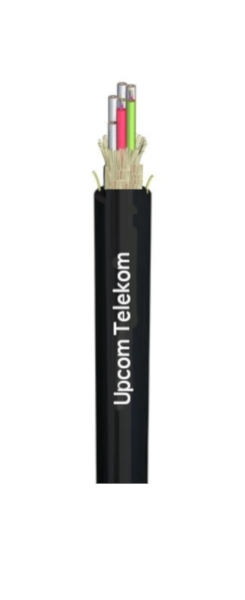
Multi Loose Tube Unarmored Cable | I-A-DQ(BN)H-MLT
Multi loose tube unarmored cable is designed for indoor and outdoor fiber routes that need an LSZH outer sheath, dielectric construction and dependable water blocking in ducts, conduits and inter-building backbone links.
This cable family combines coloured PBT loose tubes around a central strength member, water-swell tape, glass yarn reinforcement and a single LSZH jacket. The result is a practical indoor/outdoor loose-tube design for campus, telecom and building-to-building deployments where fire-aware indoor transitions matter but metallic armor is not always required.
LSZHsingle jacket for low-smoke, halogen-free performance
Dielectricnon-metallic construction for route flexibility
14 mmsample outer diameter in the listed configuration
2700/4000 Npermanent / installation tensile load
Why choose this multi loose tube unarmored cable
Balanced indoor and outdoor use
This indoor outdoor fiber optic cable is suited to inter-building links, campus backbones, ducts, conduits and protected outside-plant sections where an LSZH sheath is preferred and route conditions do not justify moving immediately to a metallic armored design.
Structure built for route stability
The cable uses coloured loose tubes stranded around a central strength element. Water-swell tape helps limit longitudinal water migration, while glass yarn improves tensile support during pulling, handling and installation.
Fiber type
G.652.D single-mode platform
The sample datasheet configuration is based on 9/125 G.652.D single-mode fiber, a familiar backbone and telecom choice for transmission at 1310 and 1550 nm.
Water blocking
Tube and core protection
Gel-filled loose tubes and water-blocking elements help protect the cable core from moisture ingress in mixed indoor/outdoor routes, especially where the cable passes between building and duct sections.
Dielectric build
Non-metallic loose-tube design
A fully dielectric loose-tube cable can be a cleaner choice where electrical isolation, lighter handling and non-metallic construction are preferred as part of the route design.
If the route includes repeated crush risk, rodent exposure, heavy impact or uncompensated direct-burial conditions, compare this model with the metallic armored PE jacket version, the metallic armored LSZH version or the armored loose tube LSZH cable.
Key features and benefits
LSZH outer jacket
Supports indoor transitions and customer premises environments where lower smoke and halogen-free sheath behaviour is an important project requirement.
Water-blocked construction
Water-swell tape and core protection reduce the risk of longitudinal water migration in route sections exposed to humidity, frost or condensation.
Glass yarn reinforcement
Additional glass yarn support helps the cable cope with pulling forces during installation without moving to a heavier metallic cable architecture.
PBT loose tubes
PBT tube construction helps protect the fibers mechanically while maintaining the handling logic expected from a multi-tube fiber optic cable.
UV-resistant sheath
The outer jacket is suited to mixed-route use where the cable may pass through outdoor sections before entering indoor termination areas.
Project-friendly flexibility
The design works well for telecom, FTTx and campus planners who need one cable family to bridge indoor and protected outdoor segments with fewer compromises.
Typical applications for indoor and outdoor fiber networks
Best-fit deployments
- Inter-building voice and data communication networks
- Campus backbone and building distribution links
- FTTB and FTTC infrastructure sections
- Duct and conduit installations
- Primary and secondary telecom routes
- Distribution box, distribution frame and customer-side panel interconnections
- Protected outside-plant sections where LSZH sheath behaviour is preferred
When to step up to armored cable
- True direct-buried runs without extra pathway protection
- Routes with higher crush or repeated impact exposure
- Outdoor paths with stronger mechanical risk
- Segments where rodent protection is a design priority
- Projects that call for a PE jacket rather than LSZH at the outer layer
For route planning context, you can compare this construction with our tight-buffered and loose-tube cable guide and the broader fiber optic cable overview. Buyers working with lower fiber counts can also review the CLT non-metallic armored SJ cable.
Multi loose tube unarmored cable construction
Layer-by-layer structure
- 9/125 single-mode optical fibers inside coloured loose tubes
- PBT loose tube layer for fiber isolation and handling stability
- Central strength member for the cable core
- Water-swell tape around the core to reduce water ingress
- Glass yarn reinforcement for additional tensile support
- Single LSZH outer sheath for indoor/outdoor deployment logic
Compliance and technical references
The listed construction is aligned with the standards referenced on the current page, including optical cable test guidance, generic cabling reference points and single-mode fiber characteristics.
- ITU-T G.652 for single-mode optical fiber characteristics
- IEC 60794-1-2 for optical cable test methodology and general guidance
- ISO/IEC 11801 for generic cabling reference context
- Telcordia GR-409 for premises fiber optic cable guidance
Technical specifications
The table below reflects the sample 12 × 12 G.652.D configuration shown on the current product page and indexed datasheet references. For higher fiber counts or project-specific variations, confirm the final build before purchase approval.
| Specification | Value |
|---|---|
| Fiber configuration | 12 × 12 G.652.D |
| Loose tube outer diameter | 2.3 mm |
| Loose tube material | PBT |
| Strength members | Water-blocking glass yarn |
| Outer jacket | LSZH |
| Weight | 180 kg/km |
| Outer diameter | 14 mm ± 0.5 |
| Tensile load (permanent / installation) | 2700 / 4000 N |
| Fiber type | 9/125 G.652.D |
| Reference wavelengths | 1310 / 1550 nm |
| Maximum attenuation | 0.36 dB/km @ 1310 nm, 0.22 dB/km @ 1550 nm |
| Crush resistance | 2000 N (IEC 60794-1-2 E3) |
| Temperature range | -30°C to +70°C (IEC 60794-1-2 F1) |
| Minimum bending radius | 20 × outer diameter (IEC 60794-1-2 E11) |
If your route needs a PE jacket, metallic armor or a different multi-tube construction, compare A-DQ(BN)2Y multi tube fiber optic cable and the broader fiber optic and data LAN cable range before freezing the specification.
FAQ about multi loose tube unarmored cable
Is this cable suitable for both indoor and outdoor use?
Yes. This cable family is intended for indoor/outdoor transition routes and protected outside-plant sections, especially where an LSZH outer sheath is preferred at the building side.
What is the difference between this cable and an armored loose-tube cable?
This version focuses on dielectric construction, water blocking and lighter handling. Armored versions add mechanical protection for harsher routes, direct-burial decisions or elevated crush risk.
Can I use this cable for direct burial?
For true direct-buried sections or routes with high mechanical risk, an armored or PE-jacket alternative is usually the safer choice. This page's construction is better aligned with ducts, conduits and protected transition routes.
Which fiber type is shown in the sample specification?
The sample table is based on 9/125 G.652.D single-mode fiber. Confirm the exact fiber standard and count for the ordered build before final approval.
Why is LSZH important for some projects?
LSZH outer jackets are often selected for indoor or indoor/outdoor transition areas where lower smoke and halogen-free behaviour is preferred as part of the building fire strategy.