



19 Feb How to Blow Fiber Optic Cable: A Comprehensive Fiber Jetting Guide
How to Blow Fiber Optic Cable: A Practical Fiber Jetting Guide
Fiber optic cable blowing, also called fiber jetting, is one of the most efficient ways to install fiber into pre-installed ducts. Done correctly, it reduces mechanical stress, lowers friction compared to many pulling scenarios, and gives installers better control over speed, airflow, and cable handling across long or bend-heavy routes.
This guide focuses on the real field workflow: equipment selection, duct preparation, machine setup, air calibration, troubleshooting, and the settings discipline that separates a clean install from a stalled one.

Why Fiber Optic Cable Blowing Works Better on Many Duct Routes
In a typical fiber optic cable blowing job, the machine combines controlled mechanical feed with compressed air. The drive system pushes the cable with limited force, while airflow helps reduce contact and friction inside the duct. That is why fiber jetting is widely used in telecom backbones, FTTx builds, campus networks, and microduct installations.
The method is especially useful when route continuity is good, the duct is properly cleaned, and the cable-to-duct relationship is appropriate. It is not magic. If the duct is wet, crushed, poorly sealed, or overloaded with bends, the machine will simply reveal those problems faster.
Fiber Optic Cable Blowing Equipment and Tools
For a reliable installation, the machine alone is not enough. A complete setup usually includes the following:
- Fiber blowing machine sized for the target cable and duct range
- Fiber optic cable suitable for jetting or blown installation conditions
- Compressor with stable airflow delivery under real working conditions
- Correct seals, inserts, rollers, or belts matched to cable OD and duct dimensions
- Lubricant compatible with the duct material, route, and site temperature
- Duct preparation tools such as sponge, foam pig, mandrel, draw line, or integrity test accessories
- Safety gear including gloves, eye protection, and hearing protection
What operators underestimate most
The most common weak point is not the machine. It is the route. Teams often trust nominal duct length, then discover hidden moisture, debris, sharp transitions, or poor coupler alignment after the cable stalls.
The second weak point is accessory mismatch. A machine can be powerful and still perform badly if the seal leaks or the roller profile is wrong for the cable jacket.
Fiber Optic Cable Blowing Machine Components That Matter
Drive system
Rollers or belts provide controlled pushing force. Their job is not to overpower the duct. Their job is to feed the cable smoothly without crushing, slipping, or deforming the jacket.
Seals and clamps
Good sealing keeps air where it should be. A poor duct connection wastes airflow, destabilizes performance, and creates false pressure readings that make operators chase the wrong problem.
Air control and monitoring
On a good fiber optic cable blowing setup, consistent airflow is more valuable than a dramatic pressure number on paper. Leaks, undersized couplings, or unstable compressor output quickly show up as erratic jetting.
Speed and torque control
The best systems let you ramp up gradually, not slam into full force. Controlled acceleration protects the cable and makes troubleshooting much easier when resistance increases.
Fiber Optic Cable Blowing Preparation
Duct preparation
- Confirm route length, bend density, intermediate points, and duct continuity
- Clean and dry the duct before installation
- Use a sponge, foam pig, or integrity test method to identify debris or partial blockage
- Inspect couplers, transitions, and entry points for leakage risk
Cable preparation
- Inspect the cable reel for transport damage, flat spots, or severe sidewall pressure
- Confirm actual cable diameter, not just the nominal label
- Match cable OD to the correct inserts, seals, and drive accessories
- Prepare lubricant quantity based on route length, duct condition, and material
Preparation rule that saves time
If the duct has not been verified, the installation has not started. It is just waiting to fail politely at 300 meters.
For broader installation discipline, see Best Fiber Optic Cabling Installation Practices and for field-side advice, read Fiber Optic Blowing Tips.
Fiber Optic Cable Blowing Safety Checklist
- Wear eye protection and hearing protection before pressurizing the system
- Verify clamps, couplings, seals, and airline connections before air release
- Keep hands, tools, and loose clothing clear of moving rollers or belts
- Do not exceed cable, duct, or machine limits just because the compressor can deliver more
- Release pressure safely before opening the machine or changing accessories
Step-by-Step Fiber Optic Cable Blowing Procedure
A good fiber optic cable blowing procedure is not about speed at the beginning. It is about creating a stable installation state, then increasing speed only when the route behaves correctly.
Set up the machine and align the entry
Place the machine on stable ground, align it with the duct entry, and remove any sharp cable entry angle. Alignment errors create side loading, inconsistent grip, and unnecessary jacket wear.
Install the correct seal and drive accessories
Fit the correct seal, insert, roller, or belt set for the actual cable diameter and duct combination. This is where many bad installs begin. A tiny mismatch can create leakage or crushing.
Prepare the cable and lubricant path
Feed the cable carefully into the machine, confirm reel payoff is smooth, and apply lubricant according to the route condition. Avoid over-lubricating blindly. Use enough to reduce friction, not enough to create a mess without benefit.
Connect air supply and perform a short calibration run
Secure the air line, confirm there are no leaks, then start with conservative settings. Run a short test to verify cable movement, seal stability, and duct response before committing to full installation.
Start fiber jetting at low speed
Begin slowly and let the airflow stabilize. Once the cable is feeding consistently, increase speed in controlled steps. Aggressive ramp-up creates heat, slippage, and stoppage faster than it saves time.
Monitor behavior continuously
Watch feed quality, cable movement, pressure stability, and machine response. If resistance rises, reduce drive speed first and inspect the system before increasing air.
Finish, secure, and test the installed cable
Once the cable reaches the destination, manage slack correctly, secure the ends, and perform OTDR or visual checks where required. Record the route and working settings for the next crew instead of making them rediscover physics from scratch.

What good calibration looks like
- Cable enters straight with no side drag
- Seal remains airtight without excessive compression
- Feed is smooth with no sudden grip-slip movement
- Air behavior stays stable when speed increases
- Operator does not need panic-adjustments every 20 seconds
Which UPCOM Machine Fits the Fiber Optic Cable Blowing Job?
Machine selection should follow cable diameter, duct size, route difficulty, and distance target. Do not oversize by instinct. It increases cost and complexity without fixing a bad duct.
ElectroFOK
Best for: compact fiber jetting, controlled indoor or FTTH-style work
Cable: Ø1-8 mm
Duct: Ø4-18 mm
Electric drive, adjustable speed and torque, touchscreen monitoring.
MiniFOK
Best for: versatile mid-range cable and microduct work
Cable: Ø2.5-12 mm
Benchmark speed: up to 80 m/min
Portable format with broad tooling flexibility for mixed projects.
FOK
Best for: mainstream telecom and backbone duct installs
Cable: Ø9-22 mm
Duct: Ø20-50 mm
Dual pneumatic drive, up to 80 m/min, up to 3000 m reference range.
HidroFOK
Best for: heavier cable and tougher long-distance routes
Cable: Ø9-24 mm
Duct: Ø20-60 mm
Hydraulic power for demanding installations and higher load stability.
For lubrication and smoother installation support, you can also review cable blowing lubricants.
Troubleshooting Fiber Optic Cable Blowing Problems
| Problem | Likely cause | What to do |
|---|---|---|
| Cable stops early | Duct obstruction, debris, water, crushed segment, hidden bend density | Stop feed, verify continuity, clean and dry the route, restart at lower speed |
| High friction or jacket heating | Wrong seal or roller profile, poor alignment, insufficient lubrication | Change accessory set, correct entry angle, re-check lubricant method |
| Pressure drop or unstable jetting | Air leak, poor duct seal, compressor instability, weak couplings | Inspect all air interfaces, tighten clamps, check real airflow delivery |
| Cable deforms or slips | Too much mechanical force, wrong grip geometry, contaminated rollers | Reduce drive force, clean contact surfaces, use the correct cable tooling |
| Good start, bad performance later | Route contamination, moisture, localized obstruction, reel payout problem | Inspect both route and cable supply path instead of only adjusting pressure |
Advanced Fiber Optic Cable Blowing Techniques
Multi-stage fiber jetting for long routes
On long-distance or obstruction-sensitive routes, breaking the installation into stages can be smarter than forcing one continuous blow. Intermediate access points let you maintain momentum, reduce accumulated friction, and troubleshoot specific segments more efficiently.
Dual-pressure or assisted-air strategy
On more complex networks, the objective is not to apply maximum pressure at the start. It is to support stable movement through the route. A controlled, staged airflow strategy is usually safer than trying to overpower bends and transitions from one end.
Microduct logic in FTTH builds
For last-mile and access-network context, see the Fiber to the Home (FTTH) guide. In those deployments, route cleanliness, microduct quality, and accessory precision become even more important because tolerances are tighter.
Environmental Factors in Fiber Optic Cable Blowing
Temperature
Temperature changes lubricant behavior, cable stiffness, and airflow efficiency. Cold routes often demand more patience and cleaner calibration.
Humidity and moisture
Water inside the duct changes friction behavior and can hide contamination. If moisture is present, dry the route before expecting stable performance.
Bends and terrain
Distance alone is not the real limiter. Bend density, transitions, elevation change, and duct workmanship often decide the install result.
Best Practices for Fiber Optic Cable Blowing
- Match machine tooling to actual cable and duct dimensions, not assumptions
- Clean and verify the duct before installation, every time
- Prefer stable airflow and proper sealing over brute-force pressure increases
- Ramp speed gradually and document what works on each route type
- Train operators to diagnose logic first, not react with more force
- Keep product choice aligned with cable range, distance, and route difficulty
Related Guides and Product Links
References
FAQ
What is fiber optic cable blowing?
Fiber optic cable blowing is a duct installation method that combines controlled mechanical feed with compressed air to move fiber cable through pre-installed ducts more efficiently.
What causes most fiber optic cable blowing failures?
Most failures come from duct condition: debris, water, poor continuity, leakage, bad transitions, and excessive bends. Machine power usually is not the real problem.
Should I increase pressure when the cable stops?
Not as a first reaction. Stop the feed, check duct continuity, seals, alignment, and lubrication. More pressure on a bad route often creates more damage, not more distance.
How do I choose the right fiber blowing machine?
Start with cable diameter, duct size, route difficulty, and distance target. Then choose the machine and accessory set that fit those conditions instead of buying the largest machine in the room.
Is fiber jetting suitable for FTTH deployment?
Yes, especially in properly prepared microduct systems. For FTTH work, precision in duct condition, seal fit, and machine setup becomes even more important because tolerances are smaller.
Plan the route first. Then choose the machine.
The best fiber optic cable blowing result usually comes from a simple sequence: verify the duct, match the tooling, stabilize airflow, and increase speed only after the route proves it deserves it.
Fiber Optic Blowing Tips - 7 important points
7 Fiber Optic Blowing Tips - Fiber optic Cable blowing is a specialized process involving the use of pressurized air to install cables into telecom ducts. This method is highly effective for blowing the fiber optic cables far away but requires careful preparation and execution to ensure success. Below, we explore the most important considerations to maximize cable blowing efficiency, minimize risks, and achieve optimal results.
1. Prioritize Safety First
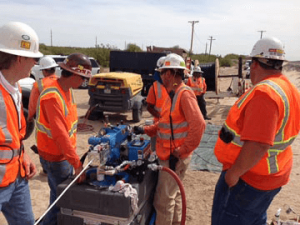
Safety is non-negotiable in cable blowing operations. Ensure all technicians are properly trained and equipped with the necessary personal protective equipment (PPE), including:
- Eye protection
- Ear muffs
- Helmets
- Protective suits
Communication between all workstations is essential. Test and confirm all safety signals (e.g., "STOP" or "RUN") before starting the machinery. Additionally, always depressurize the system before handling connections to avoid injury.
2. Use Compatible Cable and Duct Sizes
The compatibility of cable and duct sizes is critical for smooth installation. Aim for a fill ratio of 30-50%, which balances efficiency and performance. To calculate this ratio:
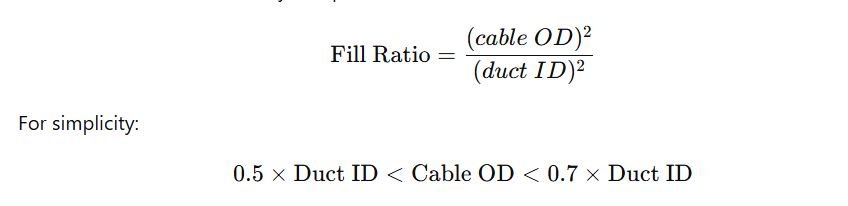
Incompatible sizes can cause blockages, reduce airflow efficiency, and lead to cable damage.
3. Protect and Prepare Your Cable
Before blowing, ensure your cable is well-protected against environmental factors:
- Use a cable cap to prevent high-pressure air from penetrating the cable.
- Store the cable drum on a suitable pay-off stand to prevent tangles and damage.
- Shield the cable from water, dust, and direct sunlight during the installation process.
4. Verify and Adjust Your Cable Blowing Machine
Proper setup of your cable blowing machine is essential. Verify the following:
- Compatibility: Ensure the machine, accessories, and compressor match the cable and duct specifications.
- Airflow and Pressure: Confirm the machine can deliver the required airflow and pressure for the job.
- Connections: Use suitable seals, nut rings, and duct connectors.
Additional Tips:
- A drier and air cooler between the compressor and machine improve efficiency by maintaining clean, dry air.
- Always ensure the pay-off stand is compatible with the cable drum size.
5. Choose the Right Compressor
Selecting the appropriate air compressor for the duct size is crucial. Here’s a quick reference guide:
| Duct Size (mm) | Airflow (m³/min) | Max Pressure (bar) | Recommended Compressor |
|---|---|---|---|
| 8 | 0.8 | 15 | Kaeser M13 |
| 8-12 | 1.0 | 15 | Kaeser M17 |
| 12-15 | 1.5-2.5 | 7 or 14 | Kaeser M17 |
| 15-20 | 3.5-5.0 | 7 or 10 | Kaeser M125 |
| 32-50 | 7-11 | 7 or 10 | Kaeser M120 |
Ensure the compressor meets the required specifications to avoid under- or over-pressurizing the system.
6. Prepare the Duct
A clean, obstruction-free duct is vital for successful cable blowing. Follow these steps:
- Gauge Test: Use a measuring device to check for damage or deformation in the duct.
- Cleaning: Run sponges through the duct to remove dirt and moisture. Repeat if necessary until the duct is clean and dry.
Pro Tip: Avoid sharp bends and connectors in the duct path as they can limit the blowing distance.
7. Optimize the Blowing Procedure
Start the blowing operation with careful adjustments to speed and pressure:
- Begin pushing the cable at 40-60 m/min without applying air pressure.
- Gradually increase the air pressure to 1-2 bars to restore speed when it slows down.
- If progress halts, release the air pressure, wait a few minutes, and restart. Repeat as needed.
When Distance Is a Challenge:
- Stop the machine and release pressure.
- Let the system stabilize for 5 minutes, then reapply air at maximum pressure.
- Resume blowing to cover the remaining distance.
Additional Tips
- Use Lubricants: Special lubricants designed for cable jetting reduce friction and enhance performance.
Cable Blowing Lubricant UP S LUB 20
Cable Blowing Lubricant UP S LUB 100XL
- Monitor Conditions: Check weather conditions like wind, rain, and temperature, as they can affect air pressure and the cable's trajectory.
- Remote Monitoring: For long-distance installations, use monitoring systems to identify and resolve issues in real-time.